
photo credit: Harv Greenberg
Bricks By Brick: Interviews With The Storytellers Behind The Screen
By: Kelly Jo Brick
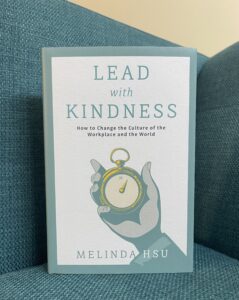
With childhood inspiration from Star Trek and Star Wars first sparking her interest in writing stories, showrunner Melinda Hsu (Nancy Drew, Tom Swift) has risen up the ranks of the writers’ room. In her new book, Lead With Kindness: How to Change the Culture of the Workplace and the World, Hsu draws on her journey from her early days in the room to her own leadership experiences to explore how a kindness-driven approach can help navigate collaboration, cooperation and the workplace.
HOW DID THE IDEA FOR YOUR BOOK, LEAD WITH KINDNESS, COME ABOUT?
 When I was on the picket lines, this is 2023 during the writers’ strike, I was briefly picket line famous because I had given this interview on on TikTok to a Japanese anime fan channel. This nice Asian lady who didn’t speak English as her first language, she said, “Our viewers don’t understand what’s happening. Could you explain it to them?” And I thought, I can’t leave this Asian woman hanging. So I took the microphone and succinctly and clearly as I could, broke down what we were doing on the picket lines.
People started to send this to their aunt in Iowa or whatever because nobody could understand what the strike was about at first. It kind of took off virally. About a month later, another thing of mine got a lot of buzz.
I was quoted in a chapter of Burn It Down, this wonderful book by Mo Ryan about the toxicity in the entertainment industry, specifically TV writing. There was a whole chapter on Lost and it got excerpted in Vanity Fair. I went on the record saying this was very dysfunctional, it happened and here was the impact on me. I tried not to demonize the leadership, but I did want to say this is what it was like for me to be on that staff. I fully took responsibility for laughing at the jokes and saying I was trying not to get fired. I have evolved since then and I wasn’t my best self for sure.
At the time people would come up and be like, you’re so brave to go on the record and how did it come about, the complex nuance of the evolution of this kind of environment? There was nothing complex about it. If the leaders had once walked into the room and said, “We want you people to treat each other with kindness and professionalism. Show us you can do that. That will please us.” We would have done that. We would have radically changed our behavior.
So I was talking to people about leadership and kindness and best practices and my manager said, “Hey, do you ever want to do a podcast? We’ve got this in-house podcast service at Mosaic.” He’s since moved on to Linden Entertainment, but Mosaic has this Ninth Planet Audio studio. They’re wonderful people. And I said, “I actually do have something I would like to talk about.”
I got people together and I would have a couple of my friends or former colleagues and we would talk about the chapters that became the book. I figured these ten things were what you could not do without. It’s not necessarily the only ten things that are good leadership, but for me the most important were inclusion, kindness, trust, love, calm, transparency, work-life integration, accountability, safety and service. So we talked about things every week and often through Hollywood lenses.
Sometimes I would kind of say it’s like this in other walks of life too or we tell an anecdote from some other line of work, but mostly it was about TV writing and Hollywood and TV production which is the world we were all coming from, but my agent, Ann Blanchard, was on the last episode of the podcast because she’s very passionate about service and we had a great discussion. At the end of it she said, “Honey, this could be a book.”
I really believe in what this is and I want to share these very spreadable, doable tactics. You don’t in fact have to be a leader to apply all of these strategies. You can do them anywhere within an ecosystem and it doesn’t have to be a workplace. It can be a school. It can be the church. It can be your family. It’s all these very practical communication skills.
INSPIRED BY YOUR BOOK, WHAT’S ONE WAY PEOPLE CAN BE MORE MINDFUL WHEN WORKING IN ENTERTAINMENT?
I felt like a lot of management books were out there saying you have to build trust with your team. But I was like, how do you do that? Especially if you’re somebody who is conflict avoidant or never managed people before or don’t want to hurt people’s feelings. So here’s a way that you can apply integrity with consistency. Tell the staff you’re going to do something that benefits them and then deliver on that promise over and over and over again. Learn to trust your word.
Here’s an example of a great promise is say I’m going to start meetings on time and I’m going to end meetings on time, because when you do that, people know their time’s respected.
THIS IS AN INDUSTRY WHERE WRITERS SO OFTEN HEAR NO. HOW CAN WE TAKE THAT MINDFULNESS AND GRACE WITH OURSELVES AS WE FACE REJECTION?
I think in some ways that’s a learned muscle skill. When you’ve had to say no to some people yourself, then you understand that it wasn’t personal. The game of inches thing, that was when my colleagues and I at Vampire Diaries were hiring writers for season 8 and we would debrief after each writer and we’d be like, wow, that one was also really good. Either of these people could very wonderfully fill this position.
My colleague James Stoteraux said, “This is a game of inches.” I never realized how much that’s true and it really has nothing to do with you sometimes. It may be that you just already have that guest at the dinner party and it’s kind of like what are we trying to round out our complement with? It’s like you are terrific, but you are a little bit overlapping in skill set or background or like you were also a hospice nurse for instance or we don’t have any nurses. We don’t have anybody with medical background. That’s great. That gives you a leg up.
So just imagine I suppose, that you are somebody who has said no to people and knows the reasons why you might say no to somebody or think of times when you’ve picked one hairdresser or over another or you decided you liked one shoe store better than another.
It wasn’t personal. It was just about what you needed in shoes. So that’s helpful to imagine yourself in a position of not making a decision on a personal basis
WHAT’S SOME OF THE BEST ADVICE YOU’VE BEEN GIVEN DURING YOUR WRITING CAREER?
Ed Solomon who wrote Bill and Ted’s Excellent Adventure and a whole bunch of wonderful stuff. Men in Black. He’s hilarious. A great writer and he was very generous with his time. He gave me an interview when I was writing for free for some web magazine. He said, “Don’t do it for the money. Don’t do it for the credit. Don’t do it for the advancement. Just do the work and all of those things will follow.”
Which I found to be true over and over again. And I found the opposite, if I do it for the money, not that I have had so many opportunities to sell out, and I’m still waiting to sell out. I’m fine with that in a lot of ways, but on some occasions, let’s say, where I’ve gone after an open writing assignment because it was already set up at a network and the primary thing on the list was like this is set up. If you get this job, you’ll get a paycheck. Secondarily, it’s a pretty cool project and you like the people. That has never worked out. I’m thinking back, I can’t think off hand of one where the primary thing being a statistically more likely paycheck that has worked out in me getting the job, probably because I wasn’t as suited for those jobs.
ANY FINAL TAKEAWAYS FOR WRITERS EARLY IN THEIR JOURNEYS?
You don’t have to lie down and roll over for a note. You don’t disagree without having just some respectful, could I ask you a question about what you mean by that. I want to make sure I understand. Depending on the situation you probably will have to do the note, but you don’t have to just silently suck it up and take a note that you don’t understand or violently disagree with.
You can at least voice, in a respectful way, here’s why I went at it that way. I understand what we’re doing and I will totally defer to you. Just so you know where I was coming from. But all the writers who I’ve worked with, who I’ve really enjoyed working with, have been very receptive to notes, like that would be so great. Please make it better. I really appreciate your time.
Nobody loves getting notes. What you want is a high five, shoot the whites, but that almost never happens. You just have to build the muscle of being gracious about notes. We all go through it. I don’t love getting notes either even after 20 odd years in the business. I still want to be told shoot the whites, high five. That’s okay. But I’m just used to it, and I’m used to being the process and not about me. But that took years and years. So many years. I mean definitely I remember on Falling Skies, so that was 2010, being so wound up about what’s the network going to think? And the showrunner Mark Verheiden, great guy said, “Well, notes are notes. They’ll have their notes.”
And I thought how can he be so Zen? Then over time, over the next few years, I was like, that is actually a good way to look at it. They are just notes. They’re just doing their part of the process and then we’ll do our next step in the process. So, yeah, don’t make it about you.
Kelly Jo Brick is a TV crime, mystery and procedural writer. A Sundance Fellow and alum of the Women In Film’s Writer/Showrunner Mentoring Circle, Kelly Jo is also the Vice Chair of the WGA Genre Committee. She wrote the Telly Award-winning film, PAUSE, and the Frank Lloyd Wright documentary, The Jewel in the Woods. Follow her on Bluesky @kellyjobrick.bsky.social