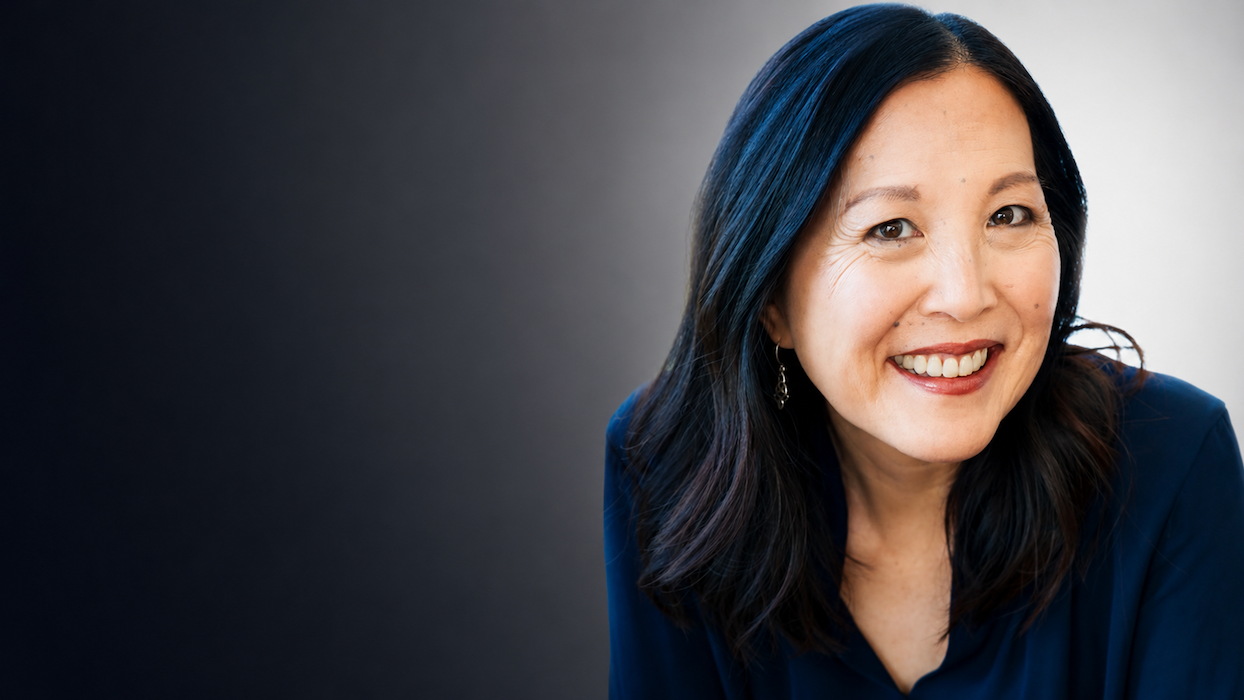
photo credit: Harv Greenberg
Bricks By Brick: Interviews With The Storytellers Behind The Screen
By: Kelly Jo Brick
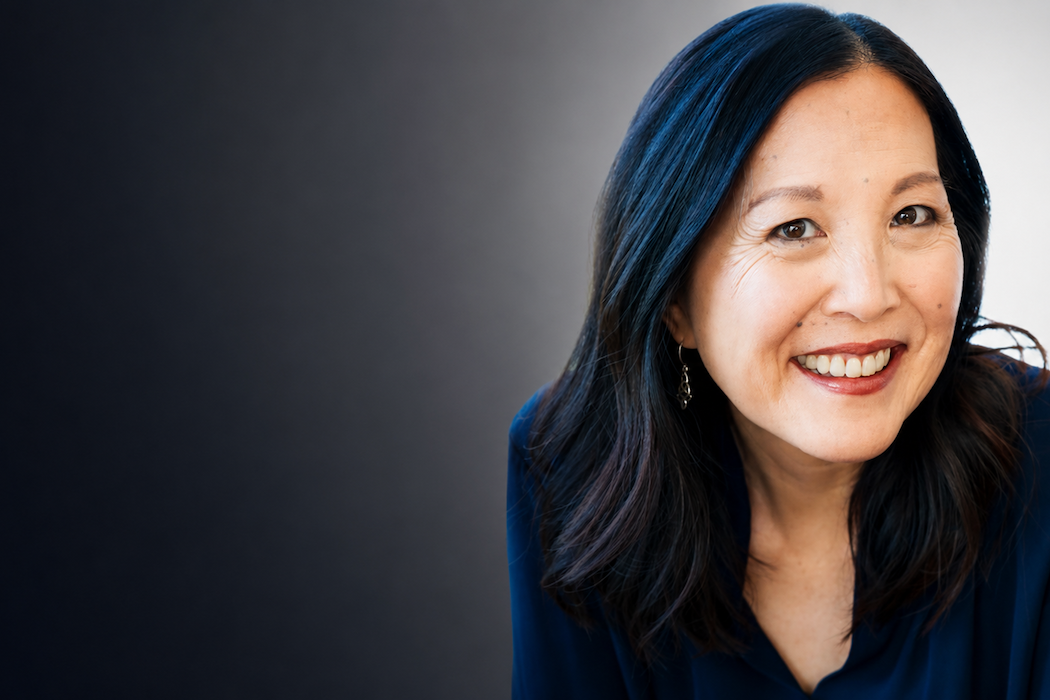
Embarking on the journey to write for film or TV can take many paths. No journey is the same, yet for those pursuing a career as a writer, there is a common element and that’s the love for story. Without knowing it, a young Melinda Hsu (Nancy Drew, Tom Swift) was leading her way to writing episodic television through the childhood tales she wrote of a telepathic baby with telekinetic powers who was accidentally beamed up to the Starship Enterprise and started having all kinds of adventures. Hsu shares her insights on learning the craft of television, breaking in and growing a successful career as a TV writer and how humility and mindfulness can be key to a writer’s road forward.
WHEN DID YOU FIRST KNOW YOU WANTED TO BE A WRITER?
When I was a little kid. I grew up in Bangor, Maine. My parents were immigrants from China and they had jobs at the University of Maine, which is why we moved there when I was an infant. I was very shy and self-conscious because I didn’t look like anybody around me so I hid in my bedroom my whole childhood reading The Lord of the Rings over and over again because in those books, if you were different, it was cool.
I gravitated towards a love of science fiction or anything with magic or a sword or spaceship. I was obsessed with Star Trek and Star Wars, but particularly Star Trek at that time and I started to write a series of novellas as an 8-year-old with Number 2 pencil on these little spiral notebooks.
HOW DID YOU THEN FIND YOUR WAY TO WRITING FOR TV?
After college I went to film school, because I realized the only time that I was happy was when I was writing. A couple of my screenplays got optioned, which was a big deal. Indie producers had paid a tiny pittance, but it was still money. I was like well, now or never. I’m going to move to Los Angeles. They’re going to make my movies. I’ll be famous. I’ll be on the cover of Time magazine. My parents will finally approve.
I moved to Los Angeles and seven years went by and I was just toiling at these terrible day jobs. I was a tour cart driver at Warner Bros. To this day it keeps me humble. It’s like any day I’m having that I’m annoyed with notes or even a long commute to a job or whatever, I’m just like, at least I’m not driving that tour cart, because everybody on that staff, everyone was nice and the tourists were great, but we’d get back to the employee lounge and everybody was reading Variety or trying to get an agent on the phone.
Anyway, my ex finally said after I had met him during a time when I was housesitting for my uncle in Orange County and was just so broke, but writing a lot, he said you should apply for this thing called the Warner Bros. Writers Workshop. I was like oh, I don’t even watch TV. I work alone. I’m a screenwriter.
He kept nudging me and to his credit, he nudged me into applying. I thought I could bang out a Law & Order spec. I sat down with a yellow pad and started to chart the progress of a Law & Order episode, like zero seconds, two guys were moving a couch down a flight of stairs and one is complaining. Oh my God, there’s a body. They call the police. They’re talking about defensive wounds and lividity and how long she’s been dead. Somebody makes a joke about traffic. Title card, one minute. So I completely learned TV structure from Law & Order reruns.
So in that program I realized I do love TV writing. It made sense to my brain, the act structure, the episodic structure over a season and a series journey for a character. It was really fun and I loved working with people.
HOW DID YOU GET YOUR FIRST WRITING JOBS?
After that program I got phone calls returned. I got an agent. I got staffed and at the time it was still okay to call the position diversity staff writer, which nowadays that’s been weaponized so they call it something else.
I got my first job on this show called Still Life, a mid-season replacement on Fox. It was sort of based on The Lovely Bones, but without the rights. It was about this young man who had been murdered in the line of duty as a cop and his family was in mourning. It was a year later and the family was trying to put itself back together and also the dad was trying to solve the murder, but the romances of the teenage siblings and the mom was running for mayor in Northern California. So the show was very poignant and melancholy and kind of sweet.
All the notes we started to get from Fox as we turned in episodes were, “Have you seen our new hit, this show called The O.C.? We know you’re shooting in Vancouver and it’s set in Northern California, so we’re not saying bikini party on the beach, but could they have some fun? Do they have to talk about the dead kid all the time? It’s depressing.” And it was a super depressing show by design.
They tried to respond to the notes and not talk about the kid at all, if ever, and it got watered down, which I totally understand. This is not to throw shade on the leadership team of that show, it’s like what could they do, really? But it became a show that was sort of inoffensive, but not really what everybody set out to make. And it never got on the air.
So then after that I got another diversity staff position on the show Medium and that was a hit. So that was great. Neither of them were actually through the Warner Bros. Program. It was just that it gave me legitimacy.
AS A SHOWRUNNER, WHAT DO YOU SEE IN UP-AND-COMING WRITERS THAT GETS YOU EXCITED?
I love a hard worker, but I always notice when people are funny. Not that you have to be funny, but it’s helpful. It’s nice to have that person in the room or when you read a script, you’re like, oh good, the network’s going to laugh at this joke too.
I love a writer with a distinctive voice, or kind of just very brutally authentic about their own experience, especially if it’s a funny way. So when things kind of jump out at me, it’s like either I’ve been there or I feel like I’ve been there when I read that. I can totally imagine being that person the way that it’s been presented on the page. Or that’s a really clever idea.
Writers I’m working with now, they’re all terrific. These are in no particular order, couple of them are fantastic researchers, like such research nerds, which research is the least that favorite thing I like to do. So I love it when somebody does a thing that I don’t like to do.
People who want to mentor others, when young writers are really kind to the assistants and go out of their way to check in on them or ask to read their scripts or organize service projects. In the shows that I have any say in it, we always do service projects.
WHAT HAVE YOU FOUND TO BE THE KEYS FOR GROWING AND SUSTAINING A SUCCESSFUL CAREER IN ENTERTAINMENT?
Humility is important. One of my favorite quotes is Lao Tzu says that all the rivers run down to the sea because it lowers itself and the sea gains its power this way from its humility and I think that’s really helpful in a writers’ room when somebody else has a pitch that you’re like that was literally on the tip of your tongue and somebody just beat you to it by a fraction of a second. I will always, as a writer, just be like that’s a great pitch, instead of saying I had that same idea.
That’s just a natural impulse and in a way that is an affirming thing, it’s kind of like yes, we’re all thinking in the same direction. That’s totally cool too, but I love letting other people be the hero, or I’ve learned to love it anyway, and I think it’s really good to foster an atmosphere of possibility among the team.
I do a lot of meditation and I listen to a mindfulness Buddhist named Jack Kornfield and he has this thing, maybe this is not unique him, but you bow to the thing. Like if you’re meditating and there’s a fire truck going by, you can’t eliminate the noise of the fire truck. You just bow to it. Like oh yes, there’s a fire truck going by. I’m still meditating. Oh, yes, and this too. This is a big thing for me. You kind of stay centered in your best version of yourself and you remember I’m over here and this other thing is happening. I’m here and the studio or the network has questions on the story area, which I think it’s fairly obvious why we should care about this person who’s the target or the interrogating suspect today, but I guess it’s not obvious to them. Let’s talk about it at three. And this, too.
Also not taking it personally. Those go really hand in hand, mindfulness, not taking it personally, maintaining internal calm. Those practices for me, I believe, make me a lot easier to work with than some people out there because, the opposite of not taking it personally and staying calm and staying centered, that creates a more difficult energy to collaborate with.
Another thing, this is still in the mindfulness category, is focusing on the desired outcome and not making it about you, just making it about the work. The desired outcome is that we can move this episode to outline today, so let’s just have the conversation with the network and try to work it out. They also want this to go to outline. They don’t want the show to be behind schedule. So let’s talk about it.
***Coming soon: More with Melinda Hsu on how mindfulness can help you navigate the challenges of the entertainment industry as she highlights her new book Lead with Kindness.
Kelly Jo Brick is a TV crime, mystery and procedural writer. A Sundance Fellow and alum of Women In Film’s Writer/Showrunner Mentoring Circle, Kelly Jo is also the Vice Chair of the WGA Genre Committee. She wrote the Telly Award-winning film, PAUSE, and the Frank Lloyd Wright documentary, The Jewel in the Woods. Follow her on Bluesky @kellyjobrick.bsky.social