Sometimes the Creepiest Monster Is the Guy Holding the Camera
 🥃🥃🥃 3 Stars – House Specialty (Decent, But Won’t Blow Your Mind)
Who’s Watching is a deeply uncomfortable psychological thriller that spends much of its first two acts daring you to remain in the company of a man you would probably cross the street to avoid. That discomfort is very much the point, and Zachary Ray Sherman commits so completely to the role of Caleb that the film becomes difficult to shake, even when it occasionally becomes difficult to enjoy. What ultimately saves the movie from becoming an exhausting exercise in voyeurism is a clever third-act shift that recontextualizes much of what came before.
The Story: When a Documentary Becomes Something Else
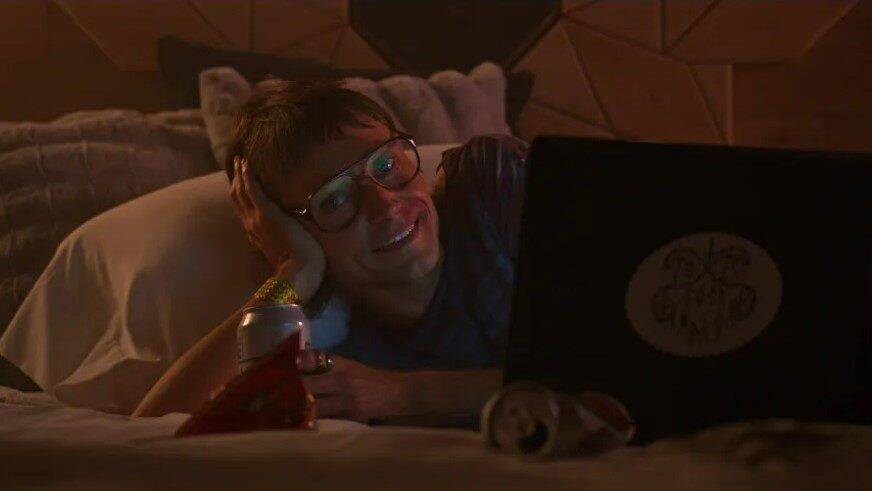
Caleb is an amateur documentarian, aspiring musician, and socially awkward loner who spends much of his time filming himself and the people around him. When Krista enters his life, Caleb quickly becomes fascinated with her, convincing himself that what he is doing is harmless observation and perhaps even the beginning of a connection. The problem is that Caleb’s idea of normal interaction is almost completely detached from reality. What begins as awkward attention gradually becomes intrusive filming, surveillance, and behavior that moves dangerously close to outright stalking.
The movie initially places the audience almost entirely inside Caleb’s perspective, which is what makes the experience so uncomfortable. Krista is less a fully realized person to Caleb than someone he is attempting to understand, capture, and ultimately possess through his camera. We see her largely as Caleb sees her, which means we are forced to participate in his distorted version of events. Eventually, however, Who’s Watching begins questioning exactly who controls the narrative, and the film changes shape in ways that are best left unspoiled.
Zachary Ray Sherman Makes Caleb Horribly Believable
Zachary Ray Sherman is the reason the movie works as well as it does. Caleb could easily have become an exaggerated horror-movie creep, but Sherman wisely keeps him grounded in something far more recognizable. Caleb is awkward, lonely, delusional, needy, occasionally funny, and completely incapable of recognizing how invasive his behavior has become. That combination makes him far more unsettling than if Sherman had simply played him as overtly dangerous from the opening scene.
What makes the performance particularly effective is that Caleb doesn’t believe he is doing anything wrong. In his own mind, he is the misunderstood protagonist of his story. He interprets attention as affection, kindness as interest, and rejection as something that can eventually be overcome if he simply keeps trying. Sherman understands that self-delusion perfectly. There are moments when Caleb almost earns your sympathy, only to say or do something that immediately reminds you that his perception of personal boundaries is almost nonexistent.
Sherman also disappears physically into the character. The posture, clothing, facial expressions, awkward delivery, and overall lack of social awareness create someone who feels less like a movie villain and more like a person you may have actually encountered. That familiarity is where much of the film’s horror lives.
The Rest of the Cast Gives Caleb Something to Push Against
 Gracie Gillam has the difficult task of portraying Krista while the audience initially experiences much of her through Caleb’s warped point of view. That works in the film’s favor because Krista gradually becomes more complicated as the movie allows us to see beyond Caleb’s fantasy version of her. Gillam never overplays the situation. Her performance remains grounded even as Caleb becomes increasingly invasive, which makes his behavior feel more disturbing.
Olivia Luccardi also brings an important energy to the film, particularly as the story begins moving beyond Caleb’s carefully constructed narrative. Her presence helps destabilize the reality Caleb believes he controls and becomes increasingly important once the film begins changing perspectives.
Tim Kasher Makes the Camera Part of the Story
Writer-director Tim Kasher understands that the most interesting element of Who’s Watching is not simply that Caleb carries a camera. It is that Caleb believes the camera gives him ownership over the story. He decides where it points, what gets recorded, and ultimately how the people around him are represented. In Caleb’s mind, that makes him the filmmaker and everyone else part of his film.
Kasher gradually begins undermining that assumption. Different cameras, perspectives, and forms of footage start complicating Caleb’s version of reality. The camera stops being a passive recording device and becomes part of the power struggle within the movie. Who is filming, who knows they are being filmed, and who gets to control the final version of events eventually become some of the film’s most important questions.
That approach gives Who’s Watching something beyond the standard found-footage or stalker premise. The film becomes about perspective, authorship, voyeurism, and the strange power that comes from controlling what another person gets to see.
The Problem Is That Caleb Is Exhausting
The biggest issue with Who’s Watching is also inseparable from what the movie is trying to accomplish. Caleb is intentionally uncomfortable to spend time with, and unfortunately, the audience spends an enormous amount of time with him.
The first two acts repeatedly place us inside his obsessive behavior. We watch him film Krista, rationalize his interest in her, misunderstand social cues, and continue moving further across boundaries that everyone except Caleb can clearly see. The discomfort is effective, but there are moments when the film risks confusing unpleasantness with suspense. You understand relatively early what kind of man Caleb is, and the movie continues reinforcing the point long after we have gotten it.
That makes the middle stretch more challenging than it probably needs to be. There is a thin line between making an audience uncomfortable and simply making them want to leave, and Who’s Watching occasionally walks right along that edge.
Then the Third Act Changes the Movie
Fortunately, Kasher has something more interesting planned than simply watching Caleb’s obsession escalate.
Without giving away the film’s major turn, the third act begins shifting the perspective of the story in a way that forces us to reconsider what we have been watching. The movie suddenly becomes less concerned with how far Caleb might go and more interested in whether Caleb has ever truly controlled the narrative in the first place.
That is where Who’s Watching becomes significantly more clever.
The movie’s obsession with cameras, surveillance, documentary filmmaking, editing, and perspective suddenly becomes more important. Earlier scenes begin to carry different implications, and the title itself takes on another meaning. Caleb has spent most of the movie watching other people, but the film eventually asks whether he has ever considered the possibility that someone might be watching him.
The switch doesn’t erase the slower or more repetitive sections of the first two acts, but it does reward the audience for sticking with the movie.
Writing and Direction
Kasher’s screenplay is strongest when it explores the difference between Caleb’s perception of himself and the reality everyone else sees. Caleb believes he is sensitive, misunderstood, and perhaps even romantic. The audience sees someone rapidly approaching dangerous obsession. That disconnect creates both the movie’s humor and its horror.
There are moments when Caleb’s social incompetence is genuinely funny, but the laughter usually catches in your throat because his behavior is also deeply disturbing. The movie understands how easily romantic persistence can become harassment when the person doing the pursuing refuses to accept the boundaries being placed in front of him.
Kasher’s direction also makes strong use of the film’s shifting visual language. The found-footage elements never feel like a gimmick added simply because the filmmakers needed a cheap aesthetic. They become integral to the movie’s themes about observation and control.
Reception: A Small Film Built for Conversation
Who’s Watching first attracted attention on the horror festival circuit, where Sherman’s performance and the movie’s unsettling approach to voyeurism became major talking points. Critics frequently singled out Caleb as the film’s greatest strength, particularly because Sherman avoids turning him into an exaggerated genre villain. The character feels disturbingly plausible, which makes the movie significantly harder to dismiss once it ends.
At the same time, the film’s deliberately uncomfortable pacing has also divided some viewers. That reaction makes sense. Who’s Watching asks the audience to spend a long time inside Caleb’s head before revealing where the story is actually headed. For viewers willing to endure that discomfort, the third act provides a satisfying payoff. For others, the journey may simply be too unpleasant.
That divide will probably follow the movie as it reaches a broader audience, but it may also be exactly what gives the film some staying power. This feels like the kind of thriller people are going to want to discuss immediately after watching it.
The CocktailsandMovies.com Bottom Line
Who’s Watching works primarily because Zachary Ray Sherman gives Caleb such an unnervingly believable presence. He creates a man who is awkward enough to occasionally inspire sympathy, delusional enough to misunderstand virtually every social cue around him, and obsessive enough that sympathy quickly becomes alarm. Caleb doesn’t see himself as dangerous. He sees himself as misunderstood, which might be the creepiest thing about him.
The movie asks quite a bit from its audience during its first two acts. Spending that much time inside Caleb’s perspective becomes intentionally exhausting, and there are moments when the film pushes the discomfort farther than the suspense can comfortably support. But the third-act switch gives the movie a much-needed jolt of intelligence, turning what appeared to be a straightforward voyeuristic stalker thriller into something more complicated about cameras, control, and perspective.
Who’s Watching isn’t an easy movie to recommend to everyone, and it isn’t supposed to be. It is intentionally awkward, invasive, and frequently unpleasant. But Sherman is excellent, Kasher knows exactly what kind of discomfort he is creating, and the film ultimately rewards the audience with a clever reversal that makes the title considerably more interesting by the time the credits roll.
🥃🥃🥃 3 Stars – House Specialty (Decent, But Won’t Blow Your Mind)
🎬 A solid, unsettling psychological thriller with a terrific central performance and a smart third-act turn. You just have to survive spending most of the movie trapped in Caleb’s company first. 🍸🍿
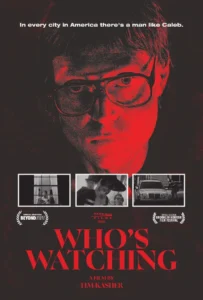
Who’s Watching is available on VOD September 18th.