Legend (1985) — Tim Curry Made Darkness Legendary By Outshining Cruise
🥃🥃🥃🥃 4 Stars – Premium Pour (Highly Recommended)
“All things change, Lady. The dreams of youth are the regrets of maturity.”
Legend is a visually astonishing dark fairy tale whose imperfections have faded with time, while Tim Curry’s Lord of Darkness has only become more magnificent.
There are actors who play villains. There are actors who disappear into villains. And then there was Tim Curry.
Curry died at his Los Angeles home on August 25, 2026, at age 80. In the wake of the news, there’s understandably a lot of revisiting happening — The Rocky Horror Picture Show, Clue, It, Annie, and the dozens of wonderfully strange characters he gave us across nearly six decades. But for this DVDeep Cut, we’re going somewhere darker.
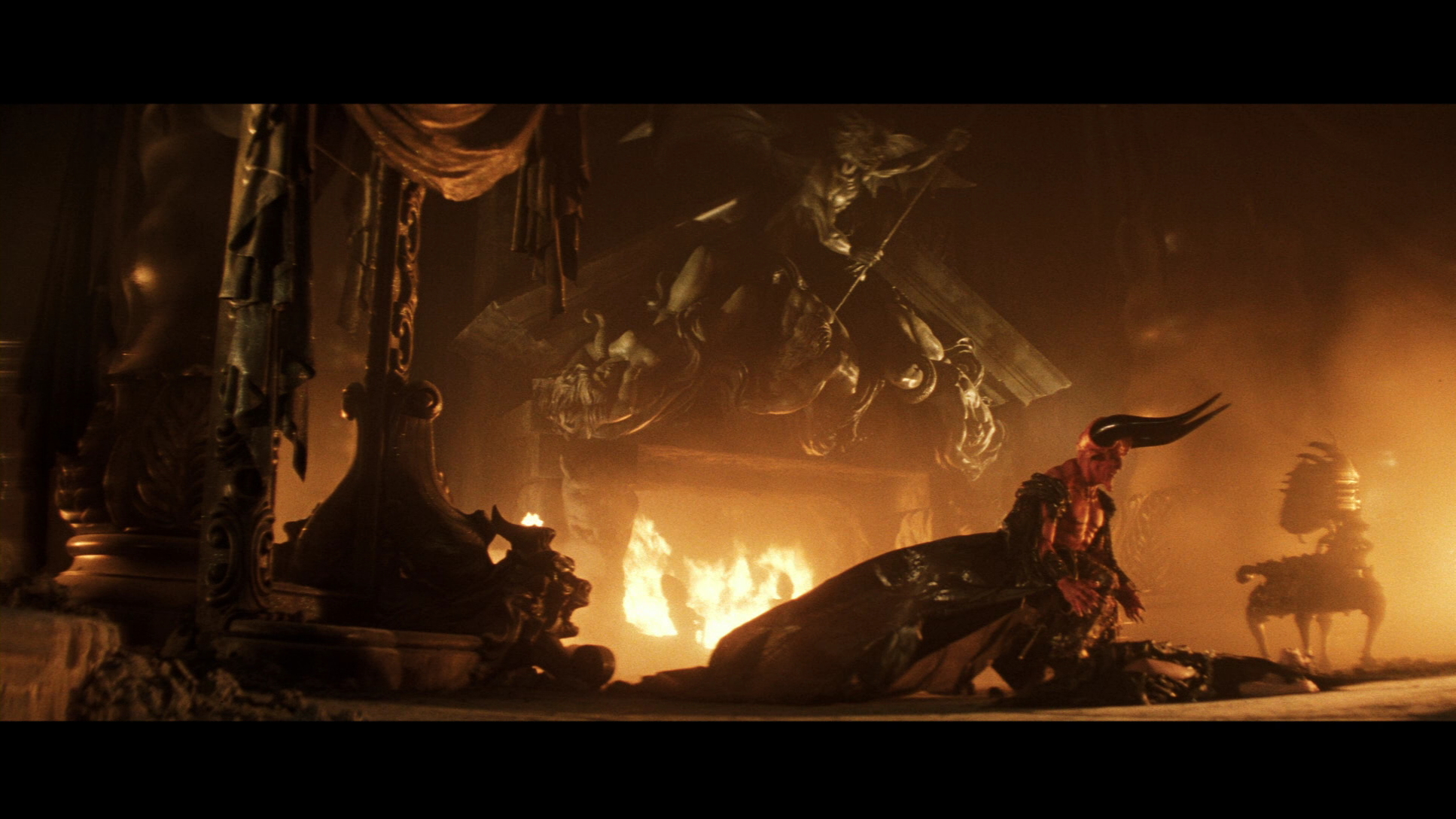
We’re returning to Ridley Scott’s 1985 fantasy Legend, a movie that wasn’t well received when it arrived, didn’t set the box office ablaze, and has spent the last forty years quietly transforming into something very different from what critics originally saw: a cult classic, a visual landmark, and home to one of the most extraordinary villain performances ever put on film. Whatever problems Legend may have, once Tim Curry’s Lord of Darkness walks out of the shadows, the movie belongs to him completely.
A Fairy Tale Before Fairy Tales Needed Franchises
Legend takes place in the kind of fantasy world movies don’t really attempt anymore — no mythology handbook, no cinematic universe, no sequel setup, and very little interest in explaining how any of it works. There’s simply light and darkness.
Jack (Tom Cruise) is an innocent forest dweller in love with Princess Lili (Mia Sara), whose fascination with a pair of magnificent unicorns inadvertently lets the goblin Blix strike one down. The attack plunges the world into supernatural winter, threatening the balance between light and dark. Jack, joined by a band of magical creatures, sets off to restore the unicorn and rescue Lili before the world freezes for good.
But underneath the storybook quest is something more interesting. Lili has been taken into the subterranean realm of Darkness, an ancient creature who intends not merely to possess her but to seduce her toward the darkness already hiding inside her. Jack’s rescue mission becomes a battle between innocence and temptation — and that’s where Legend gets genuinely interesting.
Tim Curry as Darkness: Five Stars All By Himself
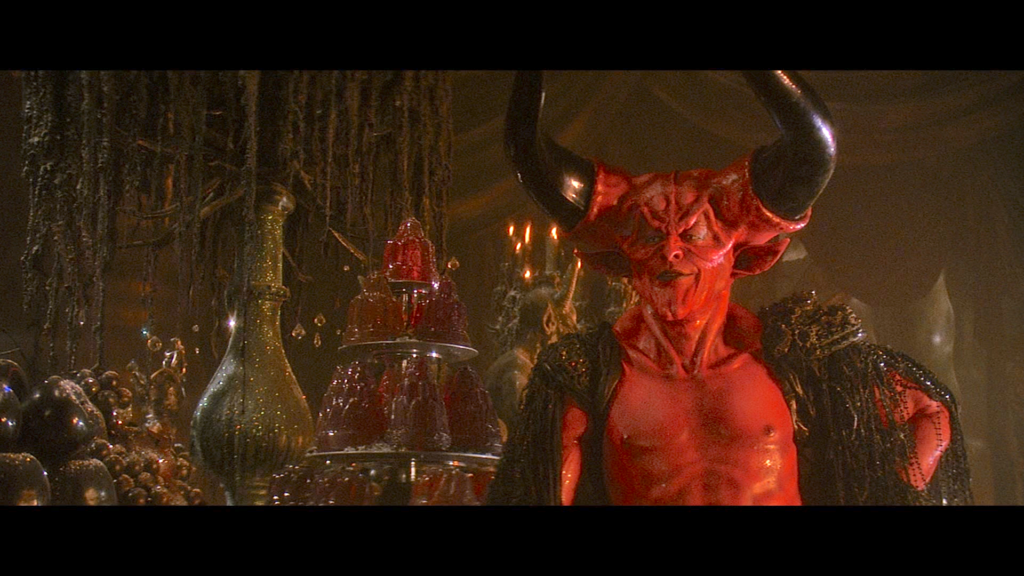 Let’s just get this out of the way: Tim Curry is fucking magnificent in this movie.
There’s no winking at the camera, no attempt to make Darkness relatable, no modern villain-therapy backstory explaining that eternal evil had a rough childhood. Curry simply commits — completely. Darkness is enormous, theatrical, sensual, vain, frightening, seductive and occasionally very funny. Curry understood something a lot of actors playing supernatural evil miss: evil should enjoy itself. And Darkness clearly does.
The physical creation is extraordinary. Special makeup effects artist Rob Bottin, fresh off redefining creature work on The Thing, buried Curry beneath elaborate prosthetics, crimson skin, hooves and enormous black horns. Curry reportedly spent hours in the chair every day. But the real trick is that the makeup never becomes the performance — Curry performs through it. The eyes move. The eyebrows arch. The mouth curls into that unmistakable Curry smile.
And then there’s the voice — the booming theatrical authority of some forgotten Shakespearean demon who’s been waiting several thousand years for someone interesting enough to talk to. When Lili tells him he’s stolen her dreams, Darkness doesn’t roar. He calmly answers: “All things change, Lady. The dreams of youth are the regrets of maturity.” That isn’t monster dialogue. That’s seduction. Darkness doesn’t want Lili imprisoned – he wants her to choose him. He doesn’t pursue her like an animal. He courts her like a king.
The result is one of cinema’s great fantasy villains, and one of the purest showcases of what made Curry so extraordinary – hilarious, frightening, seductive and completely ridiculous, all at once, without any of it canceling the others out. Only Tim Curry could stand seven feet tall, painted blood red, wearing horns roughly the size of a Buick, and make the whole thing feel believable.
Tom Cruise Before He Became TOM CRUISE
There’s another reason to revisit Legend today: look at the name above the title. This was before Top Gun turned Tom Cruise into one of the biggest stars on the planet. He’d already broken through with Risky Business, but the controlled movie-star persona we know now wasn’t fully formed yet – and that makes Jack fascinating to watch.
Cruise is startlingly young here, barefoot and long-haired, playing Jack with an earnestness that might feel ridiculous in a more cynical movie. Here, it works, because Jack isn’t Maverick with a sword – he’s innocent, and Cruise plays him without irony. That matters, because Legend itself has no irony in its body; Ridley Scott isn’t spoofing fairy tales, he’s trying to make one real. Cruise’s performance isn’t the reason people remember Legend, but his commitment helps hold it together.
Mia Sara and the Movie’s Secret Weapon
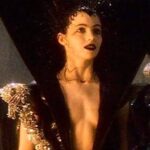 Mia Sara was still a teenager when Legend was filmed, not yet the Sloane Peterson audiences would soon know from Ferris Bueller’s Day Off. But Lili is more interesting than the standard fantasy princess waiting to be rescued – her curiosity triggers the catastrophe, and once she enters Darkness’s world, Sara gets some of the film’s richest material.
The famous sequence where Lili encounters a darker version of herself, culminating in that extraordinary black gown, is pure Ridley Scott. It also gives Sara something unusual to play: Lili isn’t simply frightened by Darkness, she’s intrigued by him. That distinction changes everything. Sara has to convince us that some part of Lili could actually surrender to what Darkness offers, and neither actor treats their scenes together as a simple damsel-and-monster standoff.
There’s real temptation there – and temptation is far more interesting than kidnapping.
Ridley Scott Builds a World You Can Almost Touch
This is where Legend becomes hard to dismiss regardless of how you feel about the script. It’s breathtakingly beautiful. Scott had already directed Alien and Blade Runner – two of the most influential visual worlds in sci-fi history – before apparently deciding to build an entire fairy tale from scratch.
The forests don’t look photographed. They look dreamed. Every frame is filled with drifting pollen, fog, snow, firelight, smoke or something glittering in the air. Nothing looks manufactured. Production designer Assheton Gorton, cinematographer Alex Thomson, costume designer Charles Knode, Bottin’s makeup team and Scott build an almost overwhelming tactile fantasy environment – and remember, this is 1985. No digital armies, no CG creatures, no virtual forests. The goblins are there. The sets are there. The snow is there. The unicorns are there. Darkness is standing right in front of the camera. That physicality gives Legend a weight a lot of modern fantasy films costing several times as much still struggle to find.
The Creatures Are Gloriously Weird
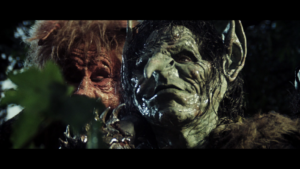 Credit to the supporting cast too – David Bennent as Gump, Alice Playten as Blix, Billy Barty as Screwball, and Cork Hubbert as Brown Tom. These aren’t polished sidekicks engineered to sell plush toys; they’re weird, sometimes unsettlingly so, which is exactly right. Blix feels pulled from a nineteenth-century children’s book written by someone who didn’t much like children. And then there’s Meg Mucklebones, another Bottin creation, who emerges from the swamp looking like the nightmare you had after your parents let you stay up too late. Scott understood that old fairy tales weren’t safe – they were strange, dangerous stories full of things that might eat you. Legend remembers that.
The Writing: Beautiful Ideas, Thin Story
Here’s where we put the drink down for a second. Legend isn’t perfect. William Hjortsberg’s screenplay has some wonderfully lyrical dialogue and real ideas about innocence, temptation, and the pull between light and dark – but it also occasionally feels like twenty pages went missing. Characters appear, rules get introduced, quests begin, and magical solutions arrive exactly when required, with everyone understanding the mythology better than we do.
Some of that simplicity is intentional – Scott wanted an elemental fairy tale, not The Lord of the Rings. But there are moments where “elemental” starts looking suspiciously like “underwritten,” and that was one of the fairest criticisms when the film opened. The story never quite catches up to the world built around it. Strangely, though, time has helped: once you stop expecting dense fantasy mythology and start watching Legend as a dream, its logic gets a lot easier to accept. Dreams don’t explain themselves. Neither does this movie.
Which Legend Should You Watch?
There isn’t really one Legend – there are several. The American theatrical cut runs roughly 89 minutes with an electronic score by Tangerine Dream. The European release was longer and kept Jerry Goldsmith’s orchestral score. Ridley Scott’s eventual Director’s Cut runs about 113 minutes and restores a good deal of character, atmosphere and narrative material.
If you’re not a Gen-Xer, our recommendation is to watch the Director’s Cut. It won’t turn Legend into a densely plotted epic, but it breathes – scenes have room, characters register, and Goldsmith’s sweeping score gives the story a timeless quality that suits Scott’s original vision. That said, an entire generation grew up on Tangerine Dream’s shimmering synths, and that version has its own passionate following. We’re not picking that fight. We’re drinking through it.
What Critics Thought Then
The critics weren’t exactly lining up to kiss the unicorn. Legend struggled commercially and landed largely negative reviews on release; its Rotten Tomatoes critics’ score still sits at just 33 percent, against a much healthier 73 percent audience score – which tells you most of what you need to know about how the film’s reputation shifted over the following decades. Roger Ebert admired the craftsmanship but felt the film lacked clear dramatic purpose, and other critics of the era echoed that split: praise for Scott’s imagery, criticism for the thin narrative. Several contemporary reviews singled out Curry as the film’s strongest asset, noting the energy he brought every time Darkness appeared. The critics weren’t entirely wrong. They weren’t entirely right, either.
How Legend Has Aged
This is exactly why DVDeep Cuts exists. Some movies diminish with time; others finally find the audience they were waiting for. Legend looks better today than it did in 1985, partly because everything around it has changed so much. We’ve spent decades watching fantasy filmmaking go increasingly digital, and going back to Legend now, Ridley Scott’s obsessive practical craftsmanship feels almost radical. You can see textures, imperfections, real light hitting real objects, real performers interacting with real creatures and environments. The film has become a cult favorite, and the Director’s Cut has helped rehabilitate it considerably – even now, retrospective reviews tend to agree that the longer cut reveals a richer film than audiences originally saw.
But there’s another reason Legend survives: Darkness. You can debate the plot, argue over which score works better, laugh at Tom Cruise’s forest wardrobe – nobody forgets Tim Curry. Forty years later, his Lord of Darkness still turns up in lists, artwork, costumes, tattoos and every conversation about cinema’s greatest fantasy villains. That’s not nostalgia. That’s iconography.
Tim Curry’s Darkness Is Why We Came Back
Tim Curry had a rare gift for creating characters that seemed impossible to imagine anyone else playing: Dr. Frank-N-Furter, Wadsworth, Pennywise, Long John Silver, Rooster Hannigan, Nigel Thornberry. Each completely different. Each unmistakably Curry. Darkness belongs right near the top of that list.
Curry understood something fundamental about entertainment: if you’re going to walk onto a screen, give the audience something worth watching. He certainly did here. Ridley Scott and Rob Bottin created the body of Darkness. Tim Curry gave it a soul – a very, very dark one.
The Bottom Line
Legend isn’t a flawless movie. It’s something arguably more interesting: a singular one. Ridley Scott made an extravagant, strange, beautiful, occasionally clumsy and utterly sincere dark fairy tale, in an era when a movie like this could still exist without launching three sequels and a streaming spinoff. Tom Cruise gives us a glimpse of a movie star just before superstardom. Mia Sara brings surprising complexity to what could’ve been a thankless princess role. The practical effects and production design remain astonishing.
But let’s not kid ourselves – Tim Curry is the legend in Legend. The moment Darkness emerges from the shadows, horns scraping the ceiling of cinema history, the movie changes. Curry doesn’t just play evil. He makes it charming, funny, seductive, terrifying, and unforgettable. That’s the performance we’re raising a glass to tonight.
“The dreams of youth are the regrets of maturity.” Maybe. But great performances don’t age that way. Sometimes they just become immortal.
🥃🥃🥃🥃 Cocktails & Movies Rating: 4 Stars – Premium Pour Highly recommended. Visually extraordinary, wonderfully strange, and still unlike almost anything else in fantasy cinema.
The Tim Curry Exception
🥃🥃🥃🥃🥃 Tim Curry as Darkness: Top Shelf Five stars. No argument. No substitutions.
Watch It?
Absolutely – and make it the Director’s Cut if you can. Turn down the lights, turn up the volume, and when Darkness finally walks into the room, raise a glass to Tim Curry. Few actors ever understood quite so well how much fun it could be to be bad.
You can buy “Legend” on Amazon Video, Apple TV Store, Fandango At Home as download or rent it on Amazon Video, Apple TV Store, Fandango At Home online
Cocktails Pairing: The Black Gown Cocktail 🍸🍿