
The Cabin in the Woods (2012) Is Our Horror Holy Grail
🥃🥃🥃🥃🥃 – A Top Shelf (Must-See!) Movie
What if every horror movie you’ve ever seen was real? What if there was a reason? A terrifying, cosmically significant reason why college kids always split up, why virgins always survive until the end, why the jock always dies protecting everyone else? The Cabin in the Woods doesn’t just ask these questions. It builds an entire mythology around them, turns the genre inside out, celebrates everything we love about horror while simultaneously eviscerating its tired tropes, and delivers one of the most audacious, brilliantly conceived, and wildly entertaining films in modern cinema history.
This is one of my absolute favorite movies. Not just favorite horror movies. Favorite movies, period. And here’s why:
The Premise
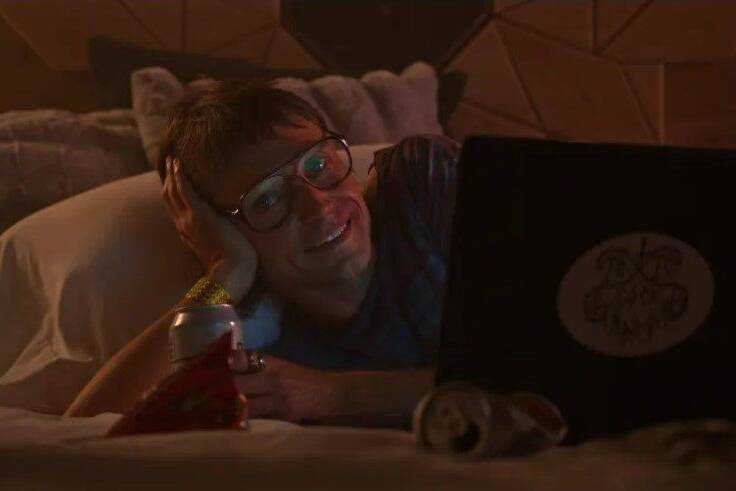
Five college friends embark on a weekend trip to a remote cabin in the woods. There’s Dana (Kristen Connolly), the bookish “final girl” recovering from a bad relationship with one of her professors. Jules (Anna Hutchison) is her best friend, the vivacious blonde who’s just dyed her hair and is dating Curt (Chris Hemsworth), the impossibly good-looking jock who’s actually getting recruited by a professional football team while maintaining a 4.0 GPA in sociology. Holden (Jesse Williams) is the sensitive intellectual who clearly has a thing for Dana. And then there’s Marty (Fran Kranz), the perpetually stoned philosophy major who sees conspiracies everywhere and carries a massive collapsible bong that he calls his “thermos.”
They pile into Curt’s cousin’s RV, a “Rambling Wreck” that’s seen better days, and head into the mountains. Along the way, they stop at a creepy gas station where an even creepier attendant (Tim De Zarn) warns them about going to “that place” and tells them they can still turn back. They don’t, of course. They never do.
The cabin itself is rustic but charming, until they discover the one-way mirror, until they find the basement door that shouldn’t have popped open on its own, until they descend those stairs and discover a room full of bizarre artifacts: an ancient diary, a puzzle sphere, a music box, disturbing old photographs, and a collection of objects that seem deliberately placed to provoke curiosity.
When Jules reads aloud from the diary in Latin, she accidentally summoning a family of sadistic, undead redneck zombies called the Buckners who begin stalking and killing them one by one in increasingly brutal fashion.
But here’s where The Cabin in the Woods reveals its genius: this is all by design.
 Before all this happened we inexplicably have a five minutes scene that seemingly has nothing to do with the college kids. But, cutting to a pristine underground facility where technicians in white coats, led by the world-weary Sitterson (Richard Jenkins) and the irreverent Hadley (Bradley Whitford), we realize they are orchestrating everything. They’re pumping pheromones into the air to make Jules act slutty. They’re dosing the friends with chemicals to make them less intelligent, more reckless. They’re controlling every variable, manipulating these kids like lab rats, placing bets on which monster they’ll summon.
Because this isn’t just about these five kids. Facilities all over the world are conducting similar rituals inherent to their local horror customs: Japan, Spain, Sweden; all simultaneously, all for the same purpose: to appease ancient gods sleeping beneath the Earth who demand sacrifice according to very specific rules. The virgin must suffer but can survive. The fool, the scholar, the athlete, the whore, each must play their role and die in the proper order, or humanity ends.
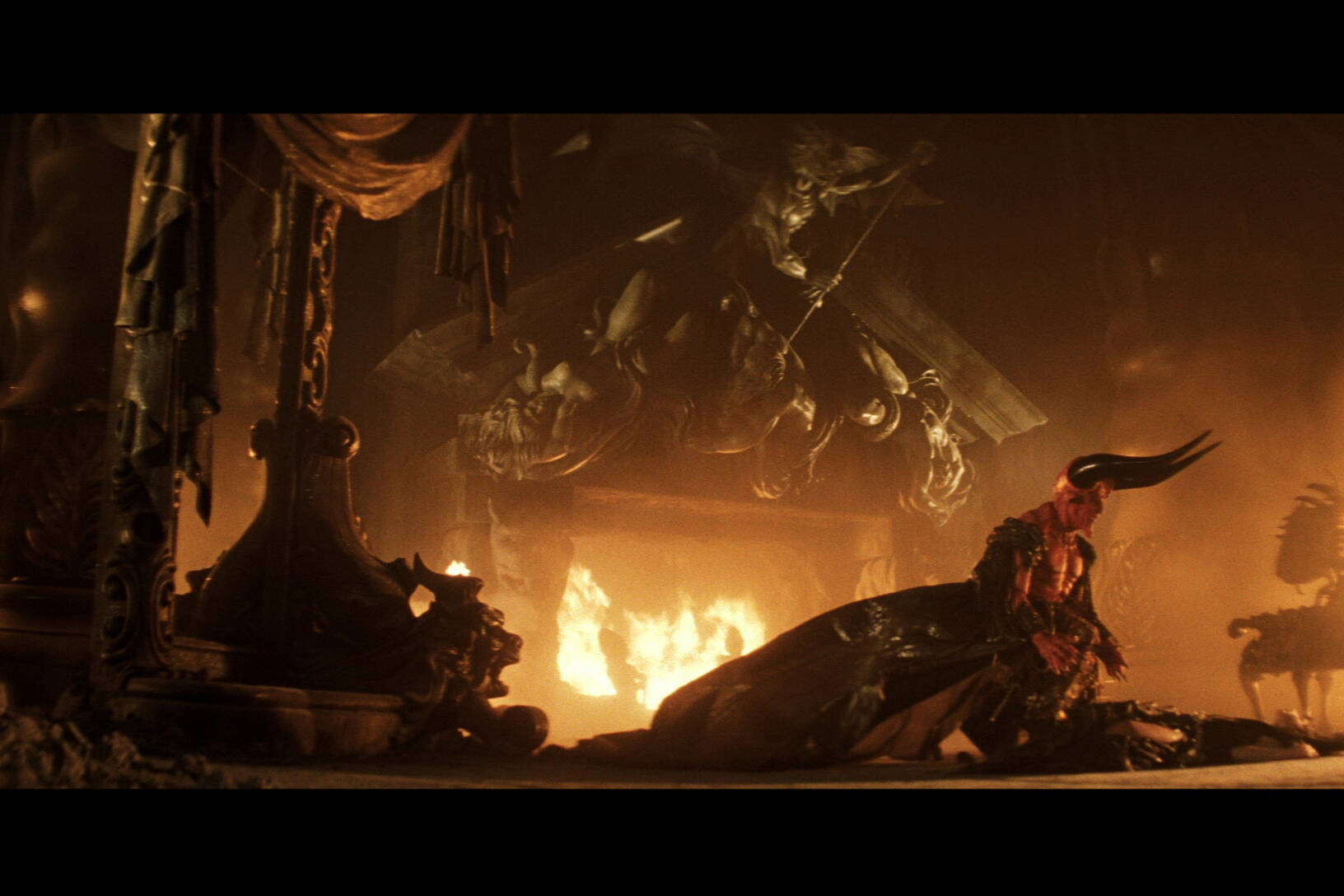
When Marty survives (being too high to fully succumb to the facility’s chemical manipulation) and rescues Dana, they descend into the facility itself and discover the truth: an entire arsenal of monsters from every horror movie trope imaginable, all caged and waiting. And when they release them all in a desperate bid for freedom, all hell literally breaks loose in what becomes the most gloriously unhinged third act in horror cinema.
The film ends with Dana and Marty sitting in the facility’s ruins, smoking Marty’s stash, as the ancient gods rise to destroy humanity. Maybe, they decide, humanity’s time is up. Maybe the world deserves a do-over.
The Goddard-Whedon Revolution
To understand why The Cabin in the Woods works so brilliantly, you need to understand the partnership behind it. Drew Goddard and Joss Whedon are two of the most creative minds in modern horror (or horror adjacent) genre storytelling, and their collaboration produced something truly special.
Goddard came up through television, cutting his teeth writing some of the best episodes of Buffy the Vampire Slayerand Angel under Whedon’s mentorship. He proved his feature writing chops with Cloverfield, then moved into the J.J. Abrams orbit working on Lost and Alias. But The Cabin in the Woods, his directorial debut, would be the film that established him as a major creative voice.
Whedon, of course, needs little introduction; the creator of Buffy, Angel, Firefly, and Dollhouse, he’d already revolutionized television by blending horror, comedy, drama, and philosophy in ways that influenced an entire generation of writers. By the time Cabin was released in April 2012, Whedon was also just weeks away from The Avengers hitting theaters, cementing his status as a mainstream powerhouse. Yet Cabin remained deeply personal, a passion project that he and Goddard wrote together in just three days during a break in the 2007 Writers Guild strike.
Whedon described it as a “loving hate letter” to the horror genre, explaining that while he loved being scared and the thrill of horror, he hated “kids acting like idiots, the devolution of the horror movie into torture porn and into a long series of sadistic comeuppances.” The Cabin in the Woods was their response: a film that celebrated everything great about horror while critiquing its most tired conventions.
The film’s production was rocky. Shot in Vancouver in early 2009 with a $30 million budget, it was originally scheduled for release in February 2010. MGM wanted to convert it to 3D, pushing the release to January 2011. Then MGM filed for bankruptcy, leaving the film in limbo. It wasn’t until Lionsgate acquired the distribution rights that Cabin finally reached theaters in April 2012, more than three years after it was filmed.
The delay turned out to be a blessing. By the time it premiered, Hemsworth had become Thor, Whedon was the Avengers director, and the film had acquired mythical status among genre fans eagerly awaiting it. Word of mouth exploded. Though it only grossed $66.5 million worldwide against its $30 million budget, modest by blockbuster standards, it earned a 92% on Rotten Tomatoes and instantly achieved cult classic status.
Why It’s a Masterpiece
The Cabin in the Woods succeeds on every possible level, which is why it’s earned a spot among our absolute favorite films.
The Meta-Narrative Is Genius
Most meta-horror films wink at the audience. Cabin builds its entire mythology around the question of why horror conventions exist. The technicians in the facility represent filmmakers and audiences; we’re all complicit in demanding these stories follow certain patterns. We want the virgin to survive. We want the jock to sacrifice himself heroically. We want to see teenagers punished for sex and drugs. The film brilliantly exposes how these expectations limit creativity while simultaneously demonstrating how you can work within them to create something fresh.
The facility itself is a masterstroke: a clean, corporate environment where killing teenagers is literally someone’s nine-to-five job. Jenkins and Whitford play it with perfect world-weariness, making dark jokes while betting on which monster the kids will summon. It’s both horrifying and hilarious, and it captures something true about how desensitized we’ve become to screen violence. Both men shine in these roles.
The Acting Is Pitch-Perfect
Every single performance works. Connolly makes Dana sympathetic and smart without being helpless. Hemsworth, pre-Thor stardom, shows genuine leading-man charisma and proves he can handle comedy as easily as action. Hutchison commits fully to Jules’s transformation from smart, confident woman to horror movie “slut” stereotype, making her death genuinely tragic.
But the real MVP is Fran Kranz as Marty. Kranz, who’d worked with Whedon on Dollhouse, brings such infectious energy and comic timing that he threatens to steal every scene he’s in. Marty could have been just another stoner joke, but Kranz makes him the smartest person in the room: the only one paranoid enough to question what’s happening. His line readings are gold, from his rant about “puppeteers” to his final observation that “I’m on TV!” when he realizes the ancient gods are watching. CNN wasn’t wrong when they said “Kranz’s witty pot-head conspiracy theorist is such an engaging personality the movie risks deflating without him.”
Then there are Jenkins and Whitford, two veteran character actors who clearly relish playing against type. As I mentioned, their chemistry is effortless, their comic timing impeccable. When Hadley mutters “I’m never gonna see a merman” with genuine disappointment after all hell breaks loose, it’s one of the film’s best jokes, and it works because Whitford plays it completely straight.
The Whedonverse Reunion
Part of what makes Cabin so special for fans is the reunion of Whedon regulars. Amy Acker, beloved as Fred/Illyria on Angel, plays Lin, the facility’s cold but ultimately sympathetic chemistry director. Tom Lenk, better known as Andrew on Buffy, appears as one of the technicians. These aren’t just stunt castings. They’re family members coming together for something special, and their comfort with Whedon and Goddard’s dialogue shows.
The whole film feels like a Whedon production. The sharp, witty dialogue that’s “always a notch or three smarter and snappier than you’d expect” as CNN noted, the philosophical debates about humanity and morality, the way humor and horror sit side-by-side without undercutting each other. It’s Buffy Season Four’s “The Initiative” crossed with every horror movie ever made, filtered through Goddard’s fresh directorial eye.
The Horror Actually Works
 For all its meta-cleverness, Cabin never forgets to be genuinely scary. The Buckner family zombies are legitimately disturbing, especially Patience Buckner. The kills are brutal and inventive. And that third-act monster purge is a horror fan’s fever dream come to life.
Goddard and Whedon enlisted AFX Studio, run by Heather Langenkamp (Nancy from A Nightmare on Elm Street) and her husband David LeRoy Anderson, to create practical monster effects. The result is a menagerie of creatures drawn from every horror subgenre: Japanese ghosts, giant snakes, werewolves, zombies, demons, aliens, killer clowns, even a merman. When they’re all released simultaneously, the carnage is glorious: a celebration of every horror monster that’s ever scared us, all going berserk at once.
The Humor Never Undercuts the Horror
This is tricky. Many horror-comedies fail because the comedy deflates the tension. Cabin walks the tightrope perfectly. The humor comes from character and situation, not from mocking the genre. We laugh with the film, not at it. Even as Hadley and Sitterson crack jokes about their job, the stakes remain real. Even as Marty quips his way through terror, we genuinely fear for his life.
The tone shifts feel organic. The film earns its laughs and its scares equally, never sacrificing one for the other. It’s genuinely funny and genuinely terrifying, often in the same scene.
The Ending Is Perfect
We won’t spoil it for the three people who haven’t seen it, but the film’s conclusion is darkly perfect. It commits fully to its premise and refuses to pull punches. The final scene between Dana and Marty, sharing a joint as the world ends, is both nihilistic and strangely hopeful. Maybe humanity had its chance. Maybe the ancient gods were right. Maybe it’s time for something new.
It’s an ending that respects the audience’s intelligence and trusts them to handle ambiguity. Not everything needs to wrap up neatly. Sometimes the most honest ending is the apocalypse. And it has that really big cameo about the boss of the American facility.
The Critical and Cultural Impact
Critics went wild for The Cabin in the Woods. IGN called it “an incredibly clever and fun take on classic horror movie tropes.” SF Gate praised it as “a wonderfully conceived story that gives a bigger than life and fascinating explanation for why so many horror movie cliches exist in the first place.” Rolling Stone’s Peter Travers wrote, “By turning splatter formula on its empty head, Cabin shows you can unleash a fire-breathing horror film without leaving your brain or your heart on the killing floor.”
The film scored 92% on Rotten Tomatoes and 72 on Metacritic, impressive for a genre film that could have easily been dismissed as too clever for its own good. It earned numerous award nominations, including Best Horror Film at the Saturn Awards and Best Sci-Fi/Horror Film from the Critics’ Choice Awards.
But its real impact has been on the genre itself. Cabin proved that horror audiences were hungry for something smarter, that you could deconstruct genre conventions while still delivering genuine scares. It influenced films like The Final Girls, You’re Next, and Ready or Not, all films that play with expectations while respecting what makes horror work.
It also demonstrated that Goddard was a major directorial talent. He’d go on to direct Bad Times at the El Royale and The Gorge, (a great film that we loved, streaming on Apple+ and SHOULD have been in theaters…) continuing to prove his ability to blend genres and subvert expectations.
Why We Love It
There are films you admire for their craft and films you love because they speak to you. The Cabin in the Woods is both.
It’s a film made by people who genuinely love horror. Not in a detached, ironic way, but with real passion and understanding. It celebrates the genre while pushing it forward. It respects the audience’s intelligence while never forgetting to entertain. It’s clever without being smug, funny without being flippant, and scary without relying on cheap tricks.
Every time we watch it, we catch something new. A monster we missed in the background. A joke that lands differently. A thematic thread we didn’t notice before. It’s endlessly rewatchable because it works on so many levels, as a horror movie, as a comedy, as a philosophical meditation on storytelling and sacrifice, as a technical showcase of practical effects and smart editing.
It’s the kind of film that makes you excited about cinema again. It reminds you that there are still original ideas, still filmmakers willing to take risks, still stories worth telling in unexpected ways.
In a landscape of remakes, reboots, and safe bets, The Cabin in the Woods dared to be different. It gambled that audiences wanted something smarter, something that challenged them while entertaining them. And it won.
The Verdict – A PERFECT Horror Film to Introduce to Someone
The Cabin in the Woods isn’t just one of the best horror films of the 21st century, it’s one of the best films of the 21st century, period. It’s a masterclass in genre filmmaking, a love letter and autopsy report for horror cinema, and a wildly entertaining ride from start to finish.
Goddard’s direction is confident and assured, never letting the meta-textual cleverness overwhelm the visceral thrills. Whedon and Goddard’s screenplay is sharp, funny, frightening, and surprisingly philosophical. The cast is uniformly excellent, with Kranz’s Marty deserving special mention as one of horror’s great stoner prophets. The practical effects are gorgeous. The monster menagerie is a horror fan’s dream. The soundtrack, by David Julyan, perfectly balances terror and wonder.
Every element works in concert to create something greater than the sum of its parts. It’s a film that rewards repeat viewings, that sparks conversations and debates, that makes you see other horror films differently after you’ve experienced it.
If you’re a horror fan and haven’t seen it, stop reading and watch it immediately. If you have seen it, watch it again. You’ll catch something you missed, and you’ll remember why you fell in love with it in the first place.
This is what happens when brilliant, passionate filmmakers are given freedom to play in the genre sandbox. This is what happens when respect for the audience meets respect for the genre. This is what happens when everything clicks.
Rating: 5 Cocktails – An absolute masterpiece. Essential viewing for horror fans, film fans, and anyone who believes movies can be smart, scary, funny, and profound all at once. One of our favorite films ever made, and it earns every drop of praise we pour on it.
CocktailsandMovies.com cocktail and movie pairing:
We genuinely think ANY cocktail will work here: www.cocktailsandmovies/cocktails Enjoy.
The Cabin in the Woods is streaming with a subscription on Peacock, Disney+, Hulu, AMC+.