
Writer Kelly Jo Brick Returns With a Filmmaker Spotlight Speaking With Ari Briskman On Writing The Indie Horror Thriller “Molt” in her “Bricks By Brick” series
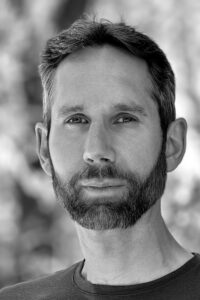 It’s a phrase that’s heard so much in the entertainment industry today, go make something. That’s just what filmmaker Ari Briskman did with his new film, Molt. As writer, director and producer of the project, he drew on his creativity and inventiveness to create an indie horror thriller that could be produced on a limited budget, finding a way to maximize locations, cast and budget to build an intriguing and compelling feature which could also showcase the story, directing and actors.
In Molt, a journalist consumed by an internet conspiracy about a sinister, unseen entity, becomes increasingly convinced the threat is real. As his investigation spirals into paranoia, he no longer knows if he’s closing in on the ominous presence — or if it’s hunting him.
Briskman shares his journey to bringing this film to life and how skills from each role of writer, director and producer helped him to grow as a creative.
WHAT INSPIRED YOU TO BRING THIS FILM TO LIFE?
In COVID the whole world shut down and it was like well, what do we do now? Trying to staff, get on shows, develop, trying to do that whole thing and then it all shut down. I was just kind of like, well I guess screw it. Make a movie.
I felt like there was this whole other huge weight that was wearing down on all of us, but in an odd way professionally, I felt this huge weight off my shoulders because it was just kind of like a timeout. It was like nobody’s doing anything.
You don’t know what’s going to happen. It’s not like I’m going to be trying to get staffed for a show anytime soon. Are there going to be shows? Are there going to be writers’ rooms? How do I nurture myself? How do I fuel myself as an artist and write the things that are important to me, but how do I also try to navigate this so I can actually have a career?
So I was like, screw it. I’m just going to make a movie. I always knew I wanted to make a movie with Mychal. He’s a dear friend. We talked about it for a while. We just never had the right idea and quite frankly, the expense and the technology wasn’t good enough yet and at a price point good enough. And then this [the iPhone] came out.
HOW DID THIS STORY COME TOGETHER?
We knew we wanted to do it somewhat set in the world of a pandemic, but not really. It’s like Contagion did that, what are you going to do? And 28 Days Later kind of did that, it was like the zombie take of it. We had the idea of isolation and using the pandemic as just kind of a visual way to approach isolation for the characters and then it evolved into this idea.
I also knew that I wanted to deal with unresolved trauma and where does that come from. I remember during the last strike, that photo of the Guild’s picket lines and someone said ChatGPT doesn’t have childhood trauma. And I was like, yeah. There’s reasons we write. There’s the stuff that we want to deal with, and this was just a way to do it.
TELL ME ABOUT YOUR EXPERIENCE WRITING THIS WITH A LIMITED BUDGET IN MIND.
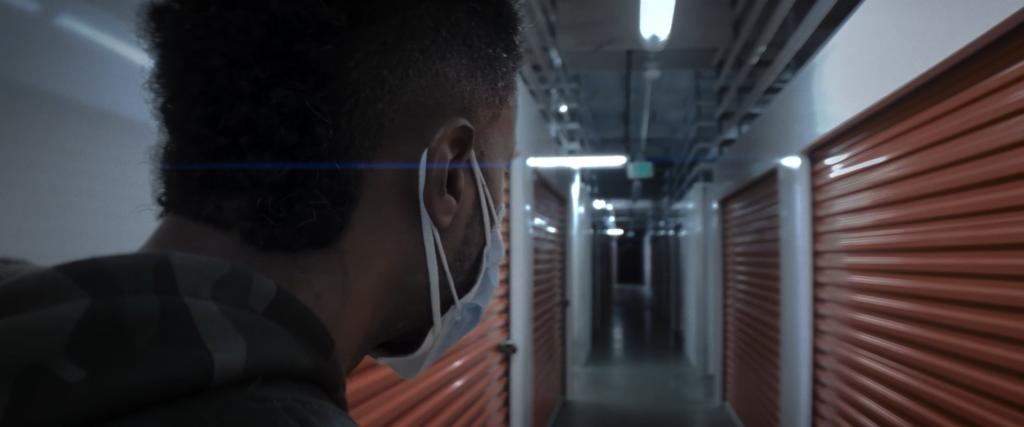 It was by far probably the most unique writing process for me. I knew I had to shoot everything I wrote. So I was kind of scouting as I was writing, because it was looking at the location and being like okay, there’s enough little pieces here that if we shoot it in a certain way, it’ll give the impression. Okay, I have now a clear idea of how to write it and how to direct it because I’ve seen the location, but more to the point of okay, I can keep this story beat.
That really impacted a lot of things. For example, we have some horror elements in the movie. Had we had a bigger budget, we would have leaned more into those things for sure. But that was really the process of I have to be able to shoot this, so I can’t write anything that’s unproducable.
WHAT ADVICE DO YOU HAVE FOR DIRECTORS ON WORKING WITH ACTORS, ESPECIALLY IN A PROJECT LIKE THIS WHERE THERE’S A LOT OF RESPONSIBILITY ON A LEAD WHO IS SOLO FOR MUCH THE FILM?
Make sure you cast the right actor first and foremost. Then it’s about trust and about checking your own ego at the door. It’s really about empowering them and giving them the space and the support to work.
I know there was one scene that we were working on, and honestly I was really starting to step on his performance, and basically he started pushing back. At one point our DP very wisely was like, why don’t we give them the room, and Mychal had the courage and the trust in me and I love him for it.
He didn’t get angry with me, but he did push back and he was like, you’re cramping me. You need to back off. Essentially I was trying to micromanage his performance in one of the scenes and you know what’s funny, when we went back to the editing room, all the takes we took were the early ones before I started stepping on his performance. He was absolutely right.
HOW ABOUT WHEN IT COMES TO BUILDING YOUR TEAM WITH CAST AND CREW?
Find the right person for the right job, both in terms of talent and also the team. Promote a culture of buy-in, promote a culture of ownership. Give people the support that they need and give them the trust and the space to work. Also you don’t necessarily verbally have to give them the permission, but give them the permission to argue with you in an appropriate, constructive way and not be insecure about your ideas and give them the freedom.
One of the great lessons I learned from film school was my second year film. We took over this bar and we were shooting before the bar was open. We went in and did a lot of pre-production and everyone was running around and doing things and I was terrified. I’m like this is chaos. I have no control. Everyone’s running around. I’m not doing anything. What’s going on? Then we sat down for one of the first shots and I looked at the monitor and it was beautiful and everyone had done great work. It was exactly what we talked about and it was exactly what I wanted.
It was this aha moment of, oh, you are not only in control, but you’re in control at this whole other level in the sense of, you should always have your hand on the reins, but the vast majority of times you should have a really loose grip on it. You should empower people and have a vision, have a plan, but have it written in pencil and the understanding that everyone’s going to bring their own flare and trust them.
WHERE DO YOU SEE THIS FILM TAKING YOU NEXT?
 Ideally this leads to the next thing. What that next thing is, given the state of the industry, who knows? The idea is as an artist, nobody thinks you can do it until you’ve done it. And if you’re putting money behind a project, I 100% understand that. As the artist, it’s the thing of like to get the job, you have to have experience, but how do you have experience if you don’t have the job?
And now you write the next project. Pitch the next project. The proof is in the pudding. Yeah, this is more of a limited budget. This is a smaller movie with limited resources and a handful of incredibly talented people. This is what we made and it’s a real movie. And it’s tension, there’s performances, the score. It’s professional and it executes, so it’s kind of like yeah, now here’s this other idea that requires more money, please give me more money.
THERE’S IS A COMMON REFRAIN THESE DAYS TO GO MAKE SOMETHING, WHAT ADVICE DO YOU HAVE FOR PEOPLE STEPPING OUT OF THEIR COMFORT ZONE AND INTO MAKING A FILM?
It all depends on what are the stakes of what they’re making. If you’re just shooting a short and it’s one location, it’s going to be a five minute short. You’re going to put some money into it, but it maybe it’s only like a couple grand, which is still not chump change, but if you can afford it, you can do that.
I do informal mini mentorships with some students from my alma mater. The advice I always give them is be willing, and I actually encourage, to fail and fail with a little f. Don’t drink and drive, like that. But fail, because you learn so much more from failure. Now somebody who is stepping out and putting a couple more zeros behind that and is actually trying to make a full feature, I wouldn’t necessarily make the advice to fail. Then again, I also wouldn’t start there, I made shorts in film school. Mychal and I made a short some years back.
That was something where we spent a couple thousand dollars, we split it and it was like a 10-minute comedic short. He actually wrote it. I helped him punch it up. I directed it. We worked together. It came out to be a great little short.
AS THIS WEBSITE IS COCKTAILS AND MOVIES, WHAT IS YOUR PERSONAL FAVORITE COCKTAIL?
I’m much more of a beer guy. I like a very nice either whiskey or bourbon barrel-aged stout.
WHAT COCKTAIL GOES BEST WITH YOUR FILM, MOLT?
Something’s that got a little bit of a bite. I would probably go with something like an old fashioned with bitters or maybe a Moscow mule.
Kelly Jo Brick is a TV crime, mystery and procedural writer. A Sundance Fellow and alum of the Women In Film’s Writer/Showrunner Mentoring Circle, Kelly Jo is also the Vice Chair of the WGA Genre Committee. She wrote the Telly Award-winning film, PAUSE, and the Frank Lloyd Wright documentary, The Jewel in the Woods. Follow her on Bluesky @kellyjobrick.bsky.social