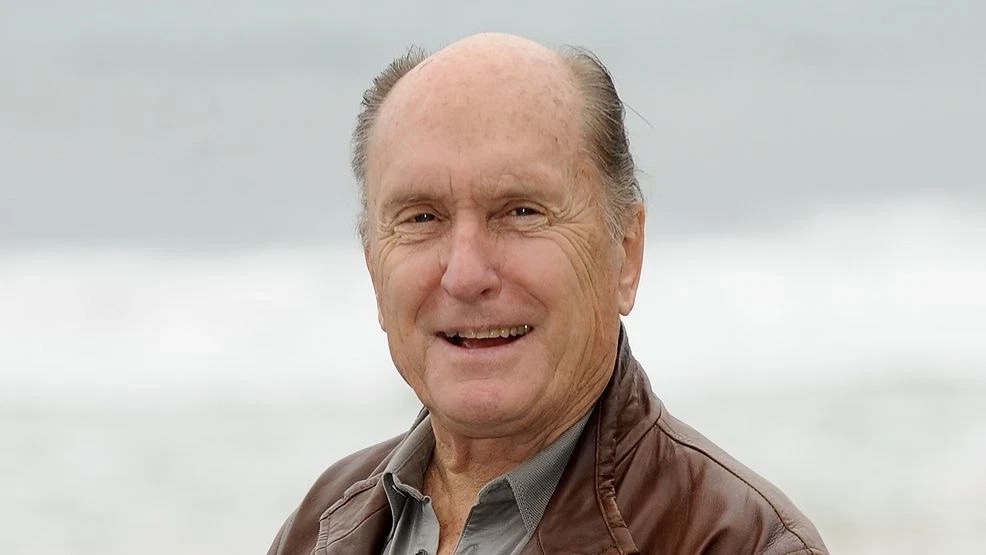
Robert Duvall Passes Away At The Age of 95
The death of Robert Duvall at 95 is one of those losses that doesn’t feel real because his work has always been there, like gravity. Duvall died Sunday, February 15, 2026, at his home in Virginia, with the news confirmed publicly on Monday, February 16, by his wife, Luciana.
What makes Duvall’s passing hit hard for man is that he wasn’t just a great performer. He was an actor’s actor in the purest sense, a craftsman who could walk into a film for five minutes and quietly rebalance the entire story. He had the rare ability to be both invisible (you forgot you were watching “Robert Duvall”) and unforgettable (you can’t imagine the movie without him).
The Long Road To “Overnight”
 Duvall was born January 5, 1931, in San Diego, the son of a Navy rear admiral and an amateur actress. He grew up moving around Navy postings, studied drama at Principia College, and served in the U.S. Army after graduating; a detail that matters, because so many of his men-on-the-edge characters carry that lived-in sense of discipline and buried volatility.
In New York, Duvall didn’t just “study acting,” he entered the kind of pressure-cooker ecosystem that forges real killers. At the Neighborhood Playhouse, training in the Meisner tradition, he came up in the same rough-and-ready orbit as Dustin Hoffman and Gene Hackman; three future legends sharing the same city, the same broke-actor hustle, the same obsession with craft over flash. It’s the kind of detail that sounds like Hollywood mythology until you remember what all three men had in common: none of them were born “leading man” pretty, none of them relied on charm as a shortcut, and all of them became dominant by sheer, granular skill. Duvall’s early New York chapter wasn’t glamorous; it was foundational. Years of work that taught him how to make a character live from the inside out, long before the camera ever bothered to notice.
The Early Stamp: To Kill a Mockingbird And The Power Of Restraint
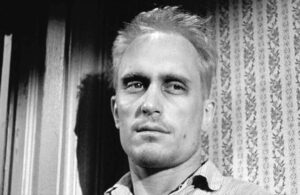
One of the first times mainstream audiences saw Duvall was as Boo Radley in To Kill a Mockingbird (1962). It’s a role with minimal dialogue and maximum myth. That’s a brutal assignment for a young actor, and he nails it by doing almost nothing. The stillness is the performance. The empathy is the performance. And in hindsight, it’s a preview of what he’d do for decades: make interior life cinematic.
The New Hollywood Era: When Characters Actors Became King
If you want the cleanest explanation of Duvall’s place in cinema history, it’s this: when American film shifted toward moral ambiguity and psychological grit in the ’70s, he was built for it.
Tom Hagen – The Godfather (1972) and the art of professional loyalty
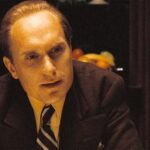 As Tom Hagen in The Godfather films, Duvall performs a kind of controlled burn. Tom isn’t the loudest or the most violent. He’s the man who keeps the machine running, the one who can speak both “family” and “law” without blinking. Duvall makes Hagen’s competence feel like tragedy: a decent man choosing the job over the soul, over and over. His nomination for the role is only part of the story; the bigger truth is that Tom Hagen became the template for the cool-headed consigliere archetype that every crime drama has been photocopying since.
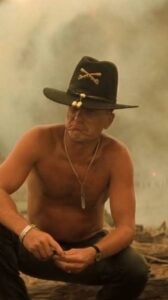
Kilgore – Apocalypse Now (1979) and charisma as menace
Then he goes full opposite: Lt. Col. Bill Kilgore in Apocalypse Now. Not an expansive role screen time wise, Kilgore is however, mythic. Not because he’s “big,” but because Duvall makes him believe his own logic. That’s what’s terrifying: he’s not playing madness as madness. He’s playing it as a worldview. The performance is so potent it basically escaped the film and entered pop culture permanently.
The rage and tenderness of fathers: The Great Santini
Duvall’s work in The Great Santini is one of the best portraits of authoritarian fatherhood ever put on screen: volcanic pride, love expressed as control, damage disguised as duty. It’s the kind of performance that doesn’t ask for your sympathy, but it earns your understanding anyway.
The Oscar role: Tender Mercies and the quiet miracle of “less”
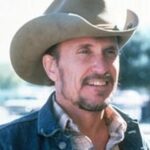 If there’s a single performance that explains why Duvall was revered, it’s Mac Sledge in Tender Mercies (1983), the washed-up country singer trying to outrun his own wreckage. He won the Academy Award for it, deservedly, but awards don’t capture what’s special here: the humility of the acting. Duvall doesn’t insist on transformation. He lets you watch the man heal in increments so small they feel like real life.
That’s Duvall’s superpower: he could make a character’s internal weather visible without turning it into a speech.
Western soul: Lonesome Dove and the role he loved
Duvall had a deep relationship with American folklore, not the romantic version, the lived-in version. That’s why Gus McCrae in Lonesome Dove lands like a career-crowning gift. According to Reuters, Duvall described Gus as his favorite role, which tracks, because it’s everything he did best: humor, melancholy, competence, affection, mortality, all braided together like a rope.
The artist as auteur: The Apostle and doing it the hard way
Plenty of actors say they want to make personal films. Duvall actually did it. The Apostle (1997) is his passion project which he wrote, directed, and starred in, and it earned him another Oscar nomination. It’s Southern Gothic, spiritual, messy, human; the kind of story a studio doesn’t love until it’s already undeniable. Encyclopaedia Britannica notes how long he spent developing it and how central it was to his identity as a filmmaker, not just a performer.
And that was Robert Duvall. If you want to honor him properly, don’t just list his well known hits. Include the fact that he fought to tell stories that mattered to him even when the market didn’t beg for them.
Late-Career Excellence: The Prestige Years (aka the “still got it” years)
Duvall never slid into autopilot. Even in later films, he showed up with that same precision and the ability to suggest decades of history in a glance.
Reuters and AP both highlight how he remained active across an enormous filmography and still earned major attention late in life, including an Oscar nomination for The Judge (2014). And by the time he appears in something like Widowsor later projects, he’s operating like a master musician: fewer notes, more impact.
The Duvall Method: Why He Was Different
Duvall was cynical, but affectionate: Hollywood is full of actors who can cry on cue. Duvall could make you believe a man had been trying not to cry for 40 years. He specialized in: Competence under pressure (Tom Hagen, lawyers, commanders, patriarchs), Men with cracked interiors who still function (Mac Sledge, Santini, so many others), and Behavioral truth: posture, pace, silence, the offhand line that reveals the whole engine
And he understood the magic trick of screen acting: the camera catches what you think, not what you announce. Duvall trusted the audience. That’s rarer than talent.
A short “starter kit” film list:
 If you’re doing a memorial watch run, I’d go with these:
-
Tender Mercies – the soul of his work and his only Oscar win
-
The Godfather / The Godfather Part II – professionalism as destiny, great films, great performances
-
Apocalypse Now – charisma turned into nightmare, watch his presence onscreen and you’ll understand why
-
Lonesome Dove – the mythic American performance
-
The Apostle – Duvall the storyteller, unfiltered
The legacy: he made “supporting” feel essential
Duvall’s real impact is structural. He helped prove that movies aren’t carried by protagonists alone; they’re carried by the lived-in ecosystem around them. He was the gold standard of the crucial character: the one who makes the world believable, the stakes real, the story heavier. A lot of actors chase “iconic.” Duvall chased true. And he got it so consistently that we started taking it for granted, which might be the biggest compliment there is.