
Bricks By Brick: Interviews With The Storytellers Behind The Screen
By: Kelly Jo Brick
Crafting compelling characters and bringing real depth and layers to them can be a challenge for many writers. As writer/director Thom Harp (Home Delivery, The Donor Party) related about writing characters, “They could scale a skyscraper, but not get to the real truth of what they are, what their issue is.”
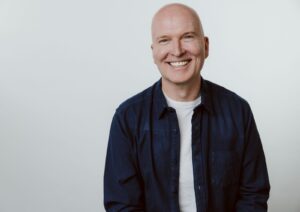
With his new movie Home Delivery now out, Harp sat down with Cocktails and Movies to share how writers can create compelling characters and engaging comedies and how leaning into your strengths can help grow opportunities as a director.
 YOU HAVE A VERY DEFINED VOICE AS A WRITER, TELLING STORIES OF SMART PEOPLE MAKING QUESTIONABLE DECISIONS THEY THOUGHT WERE A GOOD IDEA AT THE TIME. FROM YOUR EXPERIENCE, WHAT ADVICE DO YOU HAVE FOR OTHERS ABOUT FINDING THEIR VOICE IN THEIR WRITING?
I think the most important thing is to not try to find your voice, it’s to just start creating. The reason why I wanted to write is because I love writing and I love reading books and I love plays and I love movies and so what I had was my taste.
When you start writing, it’s very frustrating because what you come up with is nowhere close to what your taste is capable of. And it’s depressing. So you have to keep going and going and going. My gut feeling is that the best way to develop your voice is just to write. Some of it’s going to be very derivative in the beginning and it should be because that’s how you learn. You’re like well, I want to do something that’s like a Judd Apatow comedy or something. That’s where you start.
HOW DO YOU DECIDE WHAT TO WRITE?
I think one of the best things a writer can do is to get an app on their phone. It can be the Notes app. I use this thing called Simplenote. So if I had a line of dialogue that I came up with and I was just like that’s really funny or that’s really good and strong. I will just type it in and then put a tag at the bottom that says dialogue or scene or setting. Any of those kinds of things. Then the metaphor that I use is I remember as a kid, I had one of these big shaped u-shaped magnets and I used to love going outside whenever my parents were gardening on the weekends and I would take the magnet and run it through the dirt and you’d pull it out and it was this hairy disgusting thing, but I feel like what a good idea, and it can be a character, it can be a setting, it can be a problem, whatever it is that is that first inspiration, that’s the magnet.
Once you’ve got one that you know has some juice in it, then I put the magnet in my brain essentially, and see what sticks to it. The more stuff that sticks to it, the more I realize, okay, there’s good things here. If it’s an idea that is about a problem, then my next thought is, who is the worst person for that idea to happen to, for that problem to occur to? So then the character starts to take shape. Or if there’s a character that I’ve got a really clear beat on, then what is the worst thing that can happen to that character?
I have to know the ending before I can start writing. I need to know what the journey is that they have to take. The second thing you need is you need to know what the character wants, but what they really need. Once I have the ending, what they want in the beginning, but what they really need in the end, then I know I can get the story all the way to the end. Then I can fall back on that every time.
WHAT IS YOUR APPROACH TO CRAFTING CHARACTERS?
There was someone who pointed it out to me that my characters always seem to want something, but they don’t think it through terribly well so there’s complications. That to me was the thing where I recognized that I want the characters to want something. I don’t want a passive character.
I want them to want something and that they walk into a scene and they have a goal. The best thing is if what they want is not what they need. That’s where the comedy comes from. Or they want something so badly, but it’s the wrong thing.
I feel like that’s the thing that gives juice to my characters is that they have a really clear want going in and then my job is to make their lives as miserable as possible in trying to get what they want and until they realize that, oh, maybe what I wanted was not what I needed and what I needed was this over here.
In a TV show it’s a little different. TV shows can live within a world more, but movies really have to be about a character’s journey or a group realization or something where there is a realization at the end. You just have to have a discovery that leads to personal growth.
WHAT’S THE BIGGEST OBSTACLE YOU FACED DURING THE GROWTH OF YOUR CAREER AND HOW DID YOU GET THROUGH THAT?
The roadblock I was having was that I was an unproven director. I talked to my friend who’s passed away, Lynn Shelton, who is just a glorious human being and made these movies that are just humane and loving and funny. She was a light in my life and we had come up together in Seattle.
I asked her out because I’d had a couple scripts get optioned. Her career took off because she made Humpday and I was like, okay, I’m going to take you out to lunch. I’m going to buy you whatever you want, I just need you to tell me what are the things that that I could do to make a movie happen.
There are three things that she said that always will stick with me. The first is screen time, it’s not the length of it, it’s how many days, because every day is another change of clothes or if you have day and night, sometimes you’ll have multiple changes of clothes. So every time you have to take an actor off set to go through new makeup, new wardrobe, new all that stuff, that eats your time.
So she said that you can have something in one location, but if it’s over the course of years, then still you’re changing, you’re doing all these costume changes and anything that stops the momentum going will eat up your day.
Limiting your locations is the second one. If you’ve never been on a movie set, what happens is, even if it’s a small one, you still have several cars and trucks or vans with equipment in it that have to get to the location, offload the location, go find parking and then come back and set up the stuff inside the location. It’s an hour and a half minimum until you get your first shot. It’s nerve-racking because you’re like, I only have 15 days to make this movie. If you have another location in that same day, then you have to get everything loaded back onto the truck, drive to the next location, which might have traffic. Suddenly your day gets eaten up by these location moves. So the first thing she said is limit it to one location a day, which means write longer scenes so that you’re justified being in one location for a whole day.
Then she said the really smart thing to do is if you can limit it to only having a couple locations for the whole movie, then you can leave everything there at the end of the night, come back the next day, and suddenly in like 30 to 45 minutes, you get your first shot. That’s a huge time savings.
Then the most important thing that was so Lynn, she said you have to lean into your strengths. She had read some of my scripts. She’s like, you’re really funny. Your dialogue is great, lean into that.
This might be your only shot and you want to get the best representation of what you can do so that people, when they see it, they’ll be like I understand what your worldview is. I understand who you are as an artist. So lean into your strengths. If that’s action, then find a way to do that cheaply. But if it’s science fiction, that’s your genre that you love, then lean into that. Make sure it’s really good or exactly the kind of stuff that you love. Make the movie that you wish existed because you’re a fan of that movie.
WHAT ADVICE DO YOU HAVE FOR UP-AND-COMING WRITERS AND DIRECTORS?
Tools used to be the impediment. It used to be expensive to get a camera. It used to be expensive, especially when it was shooting film. Now the tools are very cheap. Sean Baker made Tangerine with an iPhone and got a theatrical distribution.
So first of all be a fan of the arts, be a fan of actors, be a fan of other filmmakers who are near you and volunteer to get on a set. Help other people out and it’s not to be transactional, but goodwill begets goodwill.
Find the people who have similar sensibilities. You don’t want people who are completely yes-men, but you also want to have the people who get what it is that you’re trying to do and make as many things as you possibly can. I really recommend making short films because you will learn. I know people are like it’s so cheap you might as well make a movie. I hear that a lot. And what I say is there’s a movie that Quentin Tarantino will never let anyone see. It was his first movie that he abandoned because it was horrible. He learned so much from doing that that then when he made Reservoir Dogs, it was a masterpiece.
Make the mistakes when no one’s looking. That’s my biggest piece of advice. When you are a nobody, that’s when you want to make as many mistakes as possible. Get as much work under your belt as you possibly can so that you can feel like when you’re stepping onto a set and it is a movie and you have people there who are trusting you to have a vision, you won’t have to be figuring out the simple stuff.
Kelly Jo Brick is a TV crime, mystery and procedural writer. A Sundance Fellow and alum of the Women In Film’s Writer/Showrunner Mentoring Circle, Kelly Jo is also the Vice Chair of the WGA Genre Committee. She wrote the Telly Award-winning film, PAUSE, and the Frank Lloyd Wright documentary, The Jewel in the Woods. Follow her on Bluesky @kellyjobrick.bsky.social