By: Kelly Jo Brick
Writers are often asked where their ideas come from. Most often it’s from just living life and the experiences that happen along the way. For writer/director Thom Harp (The Donor Party), his new film is inspired directly by the birth of he and his wife’s child and then inventively and creatively enhanced to bring out the hilarity of the situation.
Harp explores the ability of comedy to put a mirror up to ourselves and how you can fuel creativity through your everyday life.
TELL US A LITTLE ABOUT THIS FILM.
Home Delivery is a comedy about a woman who is a little estranged from her family and she only 10 months ago met the guy who is the upcoming father of her first child.  She’s bringing her entire family in to witness the birth of the first grandchild in the family and everything that could go wrong, does go wrong.
AND WHAT ABOUT THE INSPIRATION FOR THIS FILM?
People, when they see the movie, they’re like, was this what happened to you? I always have to say, no. What a comedy does is it takes something and then it turns it all the way up to 11, R.I.P. Rob Reiner, to just kind of exaggerate everything to get as much comedy out of it as possible.
My wife and I got married pretty young and we were the first people in our friend group, and the first people in our families, to have a grandchild. We wanted everyone to come and be there. I had a friend who was a cinematographer. I had her film us and talking to everyone in the family about their experiences and what they were hopeful for. Within an hour I could see what a mistake this was, because everyone was jockeying to try to help my wife, give her a foot massage or a back rub or whatever. What she needed to do was just laser focus in on the task at hand and here she is in a gown and naked underneath that and her whole family is there and people are in and checking her cervix and everything.
I sat and realized, wow, this is a fantastic environment for comedy because everyone had the best intentions, but we were on top of each other and we were getting in each other’s way.
TELL US ABOUT YOUR APPROACH TO CASTING A COMEDY LIKE THIS?
If you’re asking someone to do the same thing that they’ve always done, they’re going to want a lot of money for it. If you’re working with a smaller budget, then you need to be creative. One of the people who I think is brilliant at this is Vince Gilligan, who did Breaking Bad and Better Call Saul. He used people who had been in sitcoms as dramatic characters and showed that comedic actors have so much depth and range, which I had known also just from working with people.
I worked with Rob Corddry on my last movie and he trained as a Shakespearean actor. No one knows that. If you’re a fan of someone and you find out more and you listen, then you’ll know that they can do amazing things.
I remember seeing Donald Faison in Remember the Titans when he was very young and he was not the character of Turk in Scrubs that he was asked to do, so I knew he had that in him. I also knew that he was a dad and he’s very proud of his kids. So when we were going out to him, it was like I just knew that he could do the stuff that was funny, obviously, and charismatic and charming, obviously, because that’s what he’s really good at, but I also knew that he could do some of the more darker material or the more heartfelt material that was in it.
SPEAKING OF CASTING, HOME DELIVERY HAS AN INCREDIBLE CAST, HOW DID THIS ENSEMBLE COME TOGETHER?
I worked with an amazing casting director named Lisa Zagoria who most famously was one of the casting directors on the Academy Award winner CODA, which is such a beautiful movie and she just has this insight. We talked at lengths about the kinds of people we were looking for.
One of the things that I had going into it is I wrote this a while ago and one of the things that I like to do is a live reading. I wrote the character of the male midwife for Rainn Wilson, because I had gotten to know him and he is soulful, funny, beautiful, but like everyone knows he’s funny, but also he’s this very sweet, kind person who is not at all Dwight on The Office and I wanted to give him a chance to let that other side of him shine. He loved the script and he loved the character. So he was the first person to sign on.
Another person who was there at the read-through was Lesley Ann Warren. I’d been a fan. I had a crush on her when I saw Clue as a kid. She’s always so funny and brings the ability to be funny, but also have gravitas. So those were the two that we knew.
When my casting director suggested Joe Pantoliano, I was like, are you kidding me? Why is he going to want to do this guy who’s kind of a schlub in the movie and at the same time he’s kind of the moral center, like he is the good guy and the only person who’s not a jerk at any point in the movie? He said he responded to the material because he loved the script in the first place, but he also really wanted the opportunity to play a good dad, because he’d never been able to show that side of him.
I knew that what we were going to be doing in this movie was having a lot of scenes where eight people were in the room at the same time and I was going to have a microphone attached to each one of them. I wanted people who were not going to just save it for a close-up, who would be there and be generous as actors to one another.
WHAT ELSE WOULD YOU LIKE PEOPLE TO KNOW ABOUT THIS MOVIE?
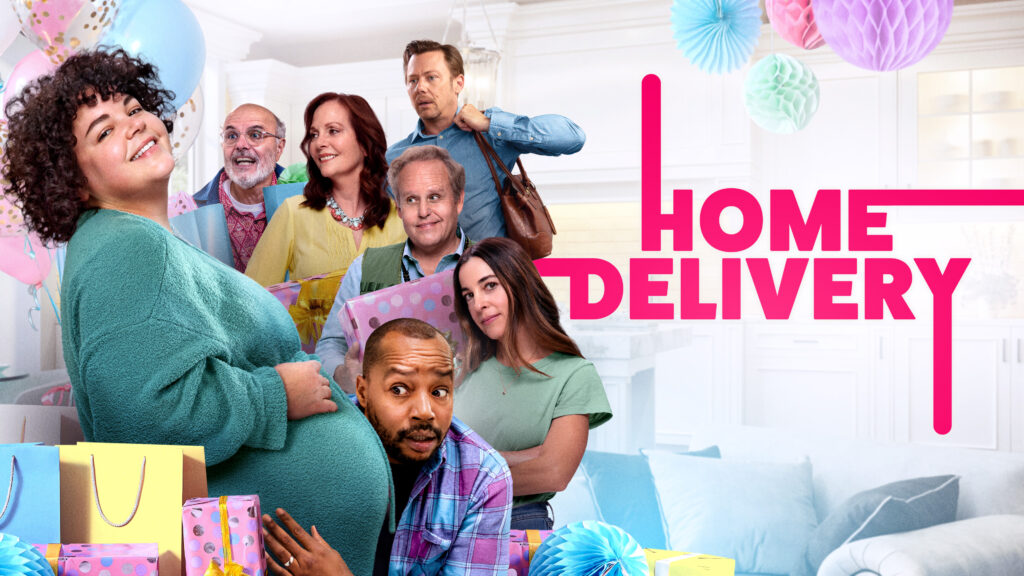 I’ll tell you the thing that I really love about the film is the idea that it’s kind of a love story between sisters in an interesting way. I wanted to talk about old wounds and how to heal stuff. I feel like when you see that it’s a comedy and you’re expecting to laugh, and you do, but there’s also a lot of heart in it and I’m so proud of the performances that everyone did.
There’s this beauty in the interplay between sisters that when you go in, and if you’re watching Lindsay Sloane and Melanie Field, you see everything is simmering right under the surface. There’s a veneer of everyone is trying to do their best and when that veneer cracks, that one word will trigger a huge amount of pain, but also how they push it down until it can’t be pushed down anymore.
One of the reasons why I wanted to do it was to talk about relationships in families and talk about love in a way that is more than just I’ve got your back and we’re family. It’s more of a finding the truth in someone after kind of being stuck in the way you’ve seen them for a long time and the ability to move forward through. It’s obviously not the top story, but it’s something that really resonates with me and hopefully will resonate with people when they watch it.
EARLY IN YOUR CAREER YOU WROTE AND DIRECTED SHORTS AND GOT IN ALL KINDS OF FESTIVALS. HOW DID CREATING SHORTS HELP GROW YOUR CAREER?
I can tell you it’s a direct line. Home Delivery was written a while ago. My kids are now teens and older, so it was written about 10 years ago. People were very interested in making it, but I wrote it so that I could direct it. I really wanted to save this one. I had other scripts. What was happening is scripts would get optioned, but not made. And that’s delightful to hear. I mean I’m not going to complain that they got optioned, but it was always so unsatisfying to have it never get made. I wanted to write something that I knew could get made. So I wrote it to be of a budget that would be small enough that they might be willing to take a risk on a first-time director.
I had producers who wanted to do that, but they couldn’t convince people to trust me because I hadn’t directed anything really of note. So I realized I need to start directing. One of the first things I did was a short for Rainn Wilson’s website, SoulPancake. I did that one and then that got the attention of Funny Or Die and I was able to do a bunch of shorts for Funny Or Die.
We only had a day on each one, so you knew you had to be efficient. You knew that the budgets were tight. You knew you had to get the very best thing that you could, but you knew you didn’t have any wiggle room because they weren’t going to pay for overtime. That discipline really helps on an independent film, but then also one of them got close to a million views. That was great. Then they would play in festivals also, because Funny Or Die was very generous about letting us submit it to festivals, so I was able to see it in front of audiences, which I think is the most important thing. You learn so much.
So when I went into directing, the people who had seen that, I was able to get The Donor Party, which I wrote after Home Delivery, ironically, to be even cheaper to make and we had producers fall in love with it. Then they got an amazing cast and I was thrilled, but again, we were able to do it because they said, “We can shoot this in 3 weeks, so we’ll do a 15-day shoot.” That was where the discipline of doing the short films kept me on task and I was able to keep things moving and keep it fun so people could have fun and know that I was going to protect their performance.
AS THIS WEBSITE IS COCKTAILS AND MOVIES, WHAT COCKTAIL DO YOU THINK GOES BEST WITH THIS FILM?
We have mimosas in the movie. I think a mimosa is sort of the perfect thing. Now there’s a challenge with that in the story, because it’s about someone who’s trying to be sober. But ultimately, I think a mimosa. It’s tangy and there’s certainly times that it’s tangy, but it’s bubbly and it goes down nice and easy and it hits you afterwards. You’re like, oh wow. I’m a little tipsy now. So the movie has the same thing. It comes in nice and easy. It’s bubbly. It’s refreshing. And then you’re like, oh wow. I’m a little wasted.
***Coming soon: More with Thom Harp on crafting characters and comedy.
Kelly Jo Brick is a TV crime, mystery and procedural writer. She is also a Sundance Fellow and alum of the Women In Film’s Writer/Showrunner Mentoring Circle, Kelly Jo is also the Vice Chair of the WGA Genre Committee. She wrote the Telly Award-winning film, PAUSE, and the Frank Lloyd Wright documentary, The Jewel in the Woods. Her Bricks by Brick interview series appears as part of cocktailsandmovies.com.
Follow her on Bluesky @kellyjobrick.bsky.social