
John Carpenter’s Halloween Changed Horror Movies and The Movie Industry
John Carpenter’s Halloween is a lean, exacting, and terrifying masterclass in indie filmmaking with pitch perfect performances, with amazingly simple writing and direction composed like a symphony of negative space. And that score is pure nightmare fuel to this day, giving me chills when I heard it (it’s my October ringtone…). It changed how horror was shot, scored, sold, and seen.
Pour something simple and strong, kill the lights, and let the piano in 5/4 do the rest.
🥃🥃🥃🥃 – Premium Pour
🔥 A minimalist masterclass in suspense that rewired horror forever.
The Story:
You probably know it but for those who were born this century: On Halloween night in Haddonfield, a masked escapee named Michael Myers returns to the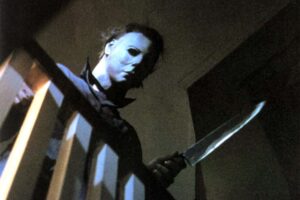 quiet streets where he first killed as a child. He stalks shy babysitter Laurie Strode and her friends, turning the sleepy cul-de-sacs and living rooms into bloody hunting grounds.
What follows is a slow, relentless tightening of the vise. John Carpenter drains the frame of safety, stretching the uneasy daylight dread into nocturnal, dark terror. By the time night falls, the film has taught you to fear open spaces, empty sidewalks, and every shadow behind a half-closed door.
Faces of Fear and Finality
Jamie Lee Curtis debuts, making her an instant star, portraying Laurie Strode. She is alert, empathetic, and resourceful, the blueprint for the “final girl” archetype that a thousand imitators over the next four plus decades would chase. Donald Pleasence brings haunted conviction as Dr. Loomis, selling the mythic scale of the evil he is tracking with a few perfectly calibrated line readings. Nick Castle’s body language as the killer is all it takes. No quips. No flourish. Just the gait of inevitability.
Terror by Reduction
Co-written by John Carpenter and Debra Hill, the script strips gore to the bone and builds suspense through rhythm, geography, and character POV. Hill’s attentive, lived-in teen dialogue grounds the film’s suburban texture, which makes the violation of that space feel truly shocking. The rules are simple. The execution is precise. Carpenter’s direction is precision horror. He uses long takes, prowling POV shots, and Panaglide movement to make you a participant in the stalking. Then he binds it all together with the infamous iconic synth score, written in an off-kilter 5/4 pulse that keeps your heartbeat permanently wrong. Carpenter has said the meter came from lessons with his father, and that the music was composed quickly once he realized the film needed a stronger jolt. The result is one of cinema’s most recognizable themes, recorded with minimal means and maximum effect.
Cinema and Horror Impact
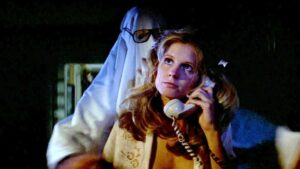 Halloween did not create the slasher out of thin air, but it codified the modern template: the masked boogeyman (that would beget Freddie and Jason, and many others), the final girl, the suburban setting turned uncanny, and suspense that prefers suggestion over splatter. Its independent-film success became a roadmap for low-budget genre filmmaking through the 1980s and beyond. It cost a mere $325,000 to make and made over $70 million. Initial reviews ranged from impressed to wary of its austerity, but time has been decisively kind. Today it is widely cited as one of the finest horror films ever made, with a sky-high critical score that reflects its reputation as the standard-setter for the genre.
Box Office: The Little Indie That Conquered
Production budget: about $320–325K.
Box office: $70.3M worldwide in original runs, including $47.3M domestic, a multiplier that is the stuff of indie legend. Inflation-adjusted, its domestic haul tops $227M.
In the end, Halloween is the rare scare machine that still cuts to the bone. Carpenter’s clean, patient framing, Curtis’s steel, and that metronomic piano riff fuse into a primal ritual of fear that never ages. Turn off the lights, pour a stiff one, and let the Shape remind you why suburban streets can feel like corridors to the void.
Rating: 🥃🥃🥃🥃 Premium Pour
🔥 A damn fine film whose influence refuses to die.
Cocktail Suggestion: The Haddonfield Highball